
Beta Glucan 500mg is attracting attention as consumers seek practical, science-informed immune support. Beta-glucans are naturally occurring polysaccharides found in yeast, oats, barley, and mushrooms. Their effects can differ substantially by source, molecular structure, and processing method. This detail matters.
The Council for Responsible Nutrition’s 2023 Consumer Survey reported that 74% of U.S. adults use dietary supplements. Market interest is strong, but popularity does not prove effectiveness. Grand View Research valued the global dietary supplements market at approximately USD 177.5 billion in 2023, reflecting growing consumer demand for wellness products. These figures describe purchasing behavior, not clinical outcomes.
Research suggests that certain yeast-derived beta-glucans may influence innate immune activity, including the function of macrophages and natural killer cells. However, the National Institutes of Health emphasizes that immune supplements should not replace vaccination, balanced nutrition, sleep, or medical care. Evidence remains product-specific. I initially assumed that 500mg automatically represented a meaningful dose. It does not. A reliable formula should identify the beta-glucan source, provide standardized testing, and disclose independent quality verification. The European Food Safety Authority has also evaluated beta-glucan claims carefully, showing why structure and intended benefit must be separated. In real use, this may mean checking the label beside a morning glass of water, rather than trusting a bold front-panel promise. Beta Glucan 500mg may offer a convenient amount for daily routines, but responsible selection requires realistic expectations, transparent labeling, and attention to individual health needs.
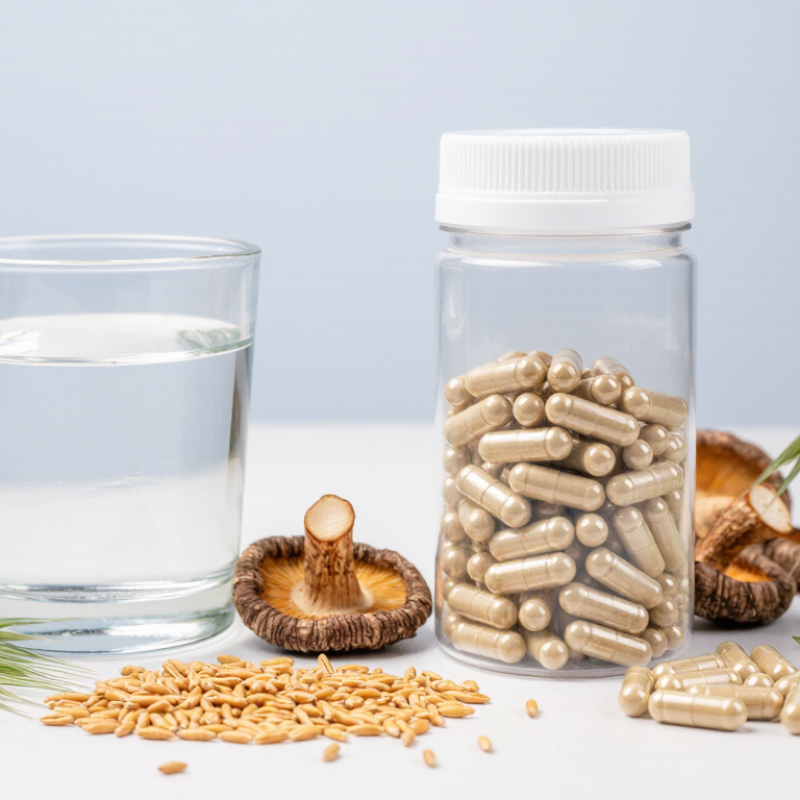
Beta glucan is a naturally occurring polysaccharide found in oats, barley, yeast, and certain mushrooms. Its effects depend on the source, molecular structure, and extraction method. Oat beta glucan mainly acts as soluble fiber, while yeast-derived forms have been studied for their interaction with immune cells. These forms are not interchangeable.
A 500mg serving may provide a convenient amount for daily use, but the number alone does not guarantee effectiveness. Some research suggests specific beta glucans can support the activity of macrophages and natural killer cells, which help the body respond to everyday challenges. The evidence is promising, not tidy. Studies use different materials, doses, and time periods, making simple comparisons difficult.
A practical label check matters. Look for the beta glucan source, measured active content, serving size, and independent quality testing. A product listing “500mg extract” may not contain 500mg beta glucan itself. That detail is easy to miss. People with autoimmune conditions, ongoing medical treatment, or allergies should ask a qualified healthcare professional before using supplements. Even healthy adults may notice no clear change, because immune health depends on sleep, nutrition, stress, and existing health conditions. Consistency helps, but it cannot replace clinical care.
Why Choose Beta Glucan 500mg for Immune Support?
Beta glucan is a naturally occurring fiber found in yeast, oats, and certain mushrooms. It has attracted scientific interest because it may support normal immune activity. However, it is not a treatment for infections or disease. Effects can vary with the source, extraction method, and individual health.
Why is 500 mg a common beta glucan amount? This dose often offers a practical balance between studied intake levels, capsule size, and everyday usability. Some research has examined similar amounts, but evidence is not identical across all beta glucan types. A 500 mg serving may sound precise, yet the actual active structure matters more than the number alone. That detail is easy to miss.
Tips: Check the beta glucan source and serving instructions. Look for clear information about the active compound, not only total powder weight. Take it consistently if appropriate, and record changes in energy, digestion, or seasonal wellness. Speak with a qualified healthcare professional if you use immune-modifying medicines, have an ongoing condition, or are pregnant. Supplements are supportive tools, not guarantees.
| Data Dimension | Evidence-Based Information | Why It Matters |
|---|---|---|
| Basic conversion | 500 mg equals 0.5 g of beta glucan. | This is a moderate, easy-to-understand quantity that fits conveniently into a single capsule or serving. |
| Why 500 mg is commonly used | Supplement formulations often use amounts in the hundreds of milligrams because beta-glucan studies have evaluated a wide range of doses, commonly from approximately 250 mg to 1,000 mg per day, depending on the source and preparation. | 500 mg sits near the middle of this broad supplemental range without implying that it is a universal or medically established target. |
| Source differences | Beta glucans from oats and barley are primarily soluble dietary fibers, while beta glucans from yeast and mushrooms have different molecular structures and biological characteristics. | The same 500 mg quantity may not have the same physiological effect across different sources. Source, branching pattern, purity, and molecular weight should be considered. |
| Amount versus active content | A product labeled “500 mg beta-glucan” should ideally specify whether the number refers to purified beta glucan, a concentrated extract, or the total raw material. | Clear standardization helps distinguish the actual beta-glucan content from the weight of the whole extract or powder. |
| Immune-support evidence | Human research suggests that some yeast- and mushroom-derived beta glucans may influence selected immune markers and may support aspects of immune function. Results vary by source, dose, duration, and study design. | 500 mg may be a practical serving size, but it should not be presented as a guaranteed treatment, cure, or protection against infection. |
| Digestive-fiber role | Oat- and barley-derived beta glucans are recognized soluble fibers and can contribute to daily fiber intake. Their physiological effects differ from those of immune-focused yeast or mushroom extracts. | The intended benefit depends on the beta-glucan source: digestive and metabolic support are not interchangeable with immune-focused use. |
| Typical tolerance | Beta glucans are generally well tolerated in food and supplement amounts, although some people may experience gas, bloating, changes in stool consistency, or sensitivity to the source material. | Starting with a lower amount and taking it with water may improve tolerance, especially for people who are not accustomed to supplemental fiber. |
| Who should seek medical advice | People with autoimmune conditions, immune deficiencies, significant allergies, chronic digestive disorders, or those taking immune-modifying medicines should consult a qualified healthcare professional before use. | Beta glucans may interact with individual health conditions or treatment plans, so personal medical guidance is important. |

| Practical conclusion | 500 mg is a convenient, moderate supplemental amount, but the most meaningful factors are the beta-glucan source, standardized active content, product quality, and evidence for the specific preparation. | Choosing by quality and transparency is more reliable than choosing by milligram amount alone. |
Important note: There is no single universally accepted beta-glucan dose for immune support. The appropriate amount depends on the source, formulation, individual health status, and intended use. Supplements should complement—not replace—balanced nutrition, routine medical care, vaccination, sleep, and other established health practices.
Beta glucan 500mg is often discussed as a practical daily amount for immune support. Its effect depends on structure, source, and processing. Yeast-derived beta glucans may interact with receptors such as Dectin-1 on macrophages and other innate immune cells. These cells help recognize unusual patterns and coordinate early immune responses.
The mechanism is not the same as “boosting” immunity. Beta glucan is not absorbed like a conventional vitamin. Some fractions may influence immune signaling through gut-associated tissue, while others may interact with circulating immune cells. A 2012 randomized trial involving 175 adults reported fewer respiratory symptom days with supplemental yeast beta glucan. However, the European Food Safety Authority has noted that evidence for broad immune claims remains limited and product-specific.
Dose matters, but 500mg is not a magic threshold. Clinical studies have used different amounts, from roughly 100mg to more than 1,000mg daily. Results also differed by beta-glucan purity and molecular structure. That is the uncomfortable part.
For practical use, check the source and the standardized beta-glucan amount, not only the capsule weight. A product containing 500mg of extract may provide less active beta glucan than expected. People with immune disorders or ongoing treatment should ask a qualified healthcare professional first. Evidence is promising, yet still uneven.
Why Choose Beta Glucan 500mg for Immune Support?
Choosing a 500mg beta glucan supplement requires more than reading the front label. A capsule may contain 500mg of extract, but only part may be active beta glucan. Check the source, such as yeast, oats, or mushrooms, and look for the stated beta-glucan percentage. Structure also matters because different linkages can produce different biological effects. The label is not enough.
Evidence remains uneven. A systematic review in Nutrients reported mixed findings for beta glucan and immune markers, with results depending on source, dose, and participant health. EFSA’s scientific opinion supports a cholesterol-related benefit from 3 grams of oat beta glucan daily, not a universal immune claim. That difference matters. A 500mg serving should not be presented as equivalent to 3 grams of oat beta glucan.
Look for independent testing, batch identification, and contaminant screening. A certificate should confirm identity and actual beta-glucan content, not merely total powder weight. Clear serving instructions help, especially when studies use different daily amounts. I would also check the full ingredient list for unnecessary fillers or undisclosed blends. Clinical studies may use purified preparations unlike retail products. That is an important weakness. People using immunosuppressive medicines, or managing autoimmune conditions, should ask a qualified clinician before supplementation. A cautious choice values transparent testing over impressive wording.
A 500 mg supplement provides 0.5 g of beta glucan. When comparing products, check the amount of active beta glucan—not just the total extract weight—along with the source, standardization, purity testing, and serving instructions.
Food values are approximate reference amounts and can vary by crop, preparation, and serving size. The chart is for comparison only and does not indicate that food and supplements have identical physiological effects.
A 500 mg label looks precise. It is not the whole story.
Beta glucan structure, source, purity, and extraction method can change its biological activity. Human research remains mixed. A review published in Nutrients reported varying immune outcomes across trials, partly because researchers used different beta glucan sources and doses. Therefore, 500 mg should not be treated as a guaranteed immune-support formula.
For many healthy adults, beta glucan is generally well tolerated at customary supplemental amounts. Mild gas, bloating, stomach discomfort, or changes in bowel habits may occur, especially during the first week. Taking 500 mg with water and a meal may improve comfort. Check the label carefully. Oat, yeast, and mushroom beta glucans are not interchangeable. EFSA has evaluated specific oat beta glucan evidence for cholesterol reduction, but that decision does not prove identical benefits for every immune-support product.
People with autoimmune conditions, allergies to the listed source, or scheduled surgery should seek medical advice before use. Beta glucan may also require caution with immunosuppressive medicines. The NIH Office of Dietary Supplements advises consumers to disclose supplements to healthcare professionals because interactions are possible. That warning is easy to overlook. A pharmacist can review the exact ingredient list, not just the 500 mg number. Evidence is promising in some settings, but it is not uniform, and personal response can be surprisingly modest.
Beta glucan is a natural polysaccharide found in oats, barley, yeast, and some mushrooms. Its source matters.
No. Oat beta glucan mainly acts as soluble fiber, while yeast and mushroom forms may interact with immune cells. They are not interchangeable.
No. A 500mg extract may contain much less than 500mg of active beta glucan. The label can mislead.
Check the source, active beta-glucan amount, serving size, full ingredients, and independent testing. Batch identification is useful too.
Some studies suggest beta glucans may support macrophage and natural killer cell activity. Results remain mixed and depend on dose, source, and health status.
No. Evidence for 3 grams of oat beta glucan relates to cholesterol support, not every immune-focused product. Amounts are not automatically comparable.
Some people notice gas, bloating, stomach discomfort, or bowel changes. These effects may appear during the first week.
Take it with water and a meal. Start carefully. Your body may respond differently.
People with autoimmune conditions, allergies, planned surgery, or ongoing medical treatment should ask a qualified healthcare professional.
No. Immune health also depends on sleep, nutrition, stress, and existing conditions. Supplements cannot replace appropriate medical care.
Beta Glucan 500mg is a popular supplement option for people seeking daily immune support. Beta glucan is a naturally occurring polysaccharide found in sources such as certain mushrooms, yeast, oats, and barley. It may help support the body’s normal immune response by interacting with immune cells and encouraging balanced activity rather than overstimulating the system. The 500 mg amount is commonly used because it offers a practical, clearly measured serving for routine supplementation.
When choosing a Beta Glucan 500mg product, consider the source, purity, extraction method, ingredient transparency, and serving instructions. Quality and consistency can vary, so selecting a product with clear labeling is important. Beta glucan should complement healthy habits, including nutritious eating, adequate sleep, and regular activity, rather than replace them. Most people tolerate it well, but some may experience mild digestive discomfort or sensitivity. Individuals with allergies, ongoing health conditions, or those taking medication should consult a qualified healthcare professional before use.