Direct from certified global manufacturing plants and production facilities.
UniCare is a leading professional supplier of natural active ingredients. Our products are widely used in various fields such as dietary supplements, food, cosmetics, and pharmaceuticals. We focus on product development and quality stability, and insist on growing together with our customers around the world.
UniCare has deep cooperation with several excellent Chinese manufacturers who have complete quality management system certifications, including but not limited to GMP, EUGMP, CEP, ISO9001, ISO22000, and HACCP. Each factory has independent testing capabilities and is equipped with advanced and efficient testing equipment to ensure the high quality and long-term stability of each batch of products.
Contact Us
Understanding the raw material origin, manufacturing processes, and technological supremacy driving the global market.
China is home to the most abundant natural reserves of Berberine-containing plants such as Phellodendron amurense (Amur cork tree) and Coptis chinensis. Our raw materials are derived from carefully managed agricultural ecosystems, offering the highest baseline concentration of Berberine alkaloids.
By leveraging dynamic countercurrent extraction and high-resolution crystallization processes, Chinese manufacturers consistently isolate Berberine Hydrochloride (HCl) at 97% to 98% purity levels, minimizing auxiliary alkaloids and organic impurities.
With an aggregate capability to process over 30,000 tons of botanical input annually, the industrial cost structure of Chinese exporters provides significant arbitrage margins for global B2B buyers without compromising batch-to-batch quality profiles.
Our guiding principles that steer our research, cultivation, and supply chains forward.

Uncovering and unleashing the new, latent value of ancient herbal remedies through biotechnology.

Iterative optimization of extraction systems and agricultural practices for sustainable supply.

Utilizing the most advanced machinery to generate standardized botanical APIs for global markets.

Ensuring employee wellness and giving back actively to local farming communities.
UniCare attaches great importance to the hardware conditions of production equipment and partner factories, boasting some of the largest and most advanced extraction lines in China. The entire production sequence is regulated by modern, intelligent, and automatic DCS control systems, ensuring thermal and chemical extraction processes remain ultra-stable.
Currently, our manufacturing infrastructure includes two GMP-compliant workshops containing six multi-functional extraction lines. This includes the only high-purity acetone-process extraction line for Ginkgo Biloba Extract in China that fully complies with strict EU GMP criteria. Together with our state-of-the-art fermentation lines, we process up to 30,000 tons of Chinese medicinal and plant raw materials each year.

Facilities conform completely to domestic and international Good Manufacturing Practices.

Ginkgo Biloba Extract certified with EU-GMP and CEP for high-barrier export markets.

Automatic regulation of temperature, flow, and solvent concentration across all cycles.

Equipped with advanced domestic pressure-vessels and clean-in-place (CIP) units.

Unmatched processing scale allows continuous support for massive multinational orders.

Three annular dynamic countercurrent extraction lines (10T & 15T) and two multi-functional lines (32 tanks).
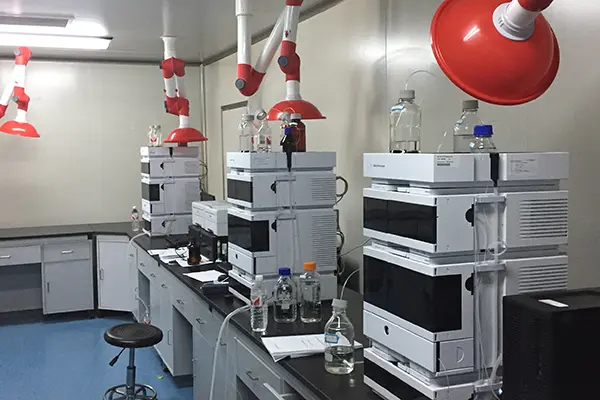
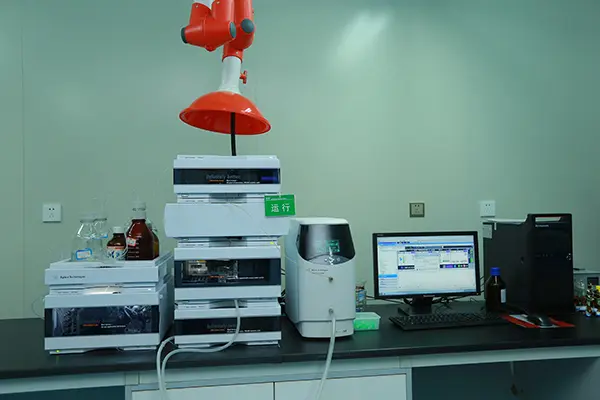
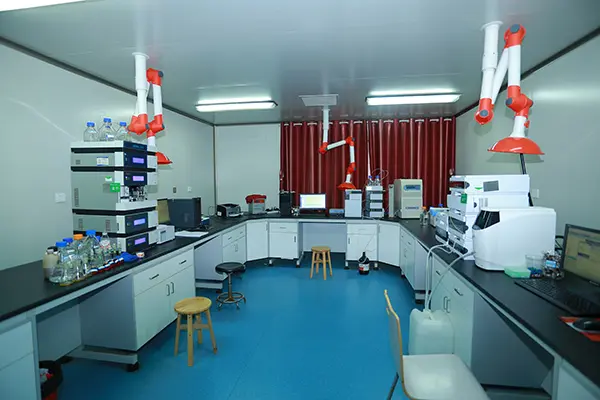
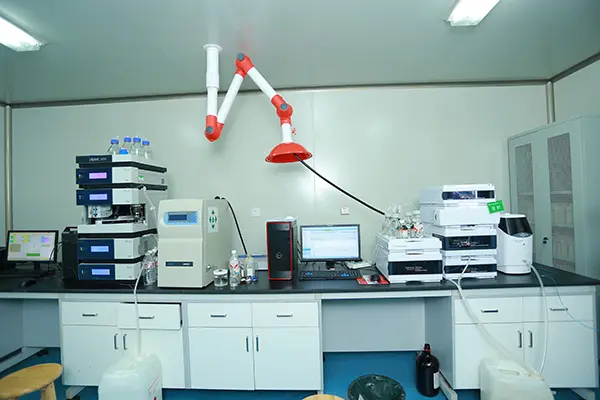
A look inside our CNAS-qualified laboratory containing advanced analytical instruments.
UniCare and its manufacturing partners have established a leading and complete quality control system, and strictly control the high quality of products in accordance with international protocols. Our central laboratory measures approximately 2,000 m² and is qualified by CNAS.
Detectable Parameters Include: Active ingredient identification and assay (HPLC/UV), solvent residue verification (GC), organochlorine pesticide residues (GC-MS-MS), heavy metals including lead, arsenic, mercury, cadmium, copper (ICP-MS), microscopic botanical identification, moisture content, dry weight loss, total ash, microbial limits, and thin-layer chromatography (TLC).
| Parameters Checked | Methods & Testing Specifications |
|---|---|
| Active Ingredient Analysis | Assay, chemical fingerprinting, HPLC/UV verification |
| Hazardous Substance Analysis | ICP-MS for heavy metals, GC-MS-MS for pesticide residues & solvent residues |
| Microbe Analysis | Standard plate count, yeast & mold, absence of E. coli & Salmonella |
| Raw Material Control | Origin verification, GMO testing, allergen verification, and GACP compliance |
| Stability Testing | Real-time and accelerated stability studies to guarantee target shelf life |
| Instrument Model | Quantity & Application |
|---|---|
| UHPLC, Agilent 1290 | 2 units - Ultra-high performance liquid chromatography |
| HPLC, Agilent 1260 | 4 units - High-performance active compound isolation |
| HPLC, Shimadzu LC-20AT | 2 units - Routine botanical assay validation |
| ELSD, Shimadzu 2000ES | 2 units - Evaporative light scattering detection |
| GC, Shimadzu 2010 | 1 unit - Gas chromatography for residual solvent limit tests |
| AAS, Shimadzu AA-7000 | 1 unit - Atomic absorption spectrophotometer for heavy metals |
How we secure high-potency raw materials and pioneer sustainable manufacturing workflows.
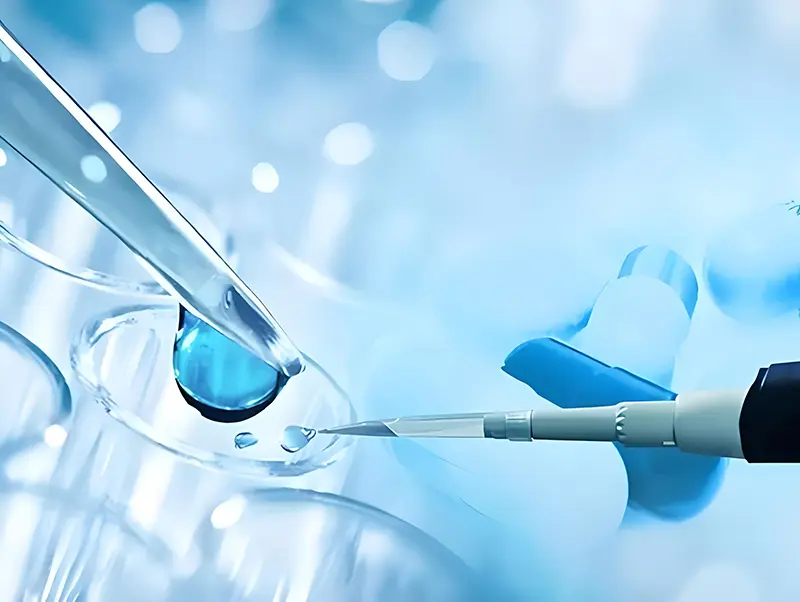
UniCare reinvests 10% of our annual net profit into research and development. In addition to optimizing and developing existing botanical extraction methods, we have established a professional R&D division for bio-fermentation. By increasing investment in natural fermentation solutions, we seek to transcend classical extraction bottlenecks and advance eco-friendly yields.
We maintain active cooperation with the Beijing University of Chemical Technology in the biological fermentation domain, jointly engineering and commercializing novel raw materials for pharmaceuticals, cosmetics, and functional nutrition brands globally.
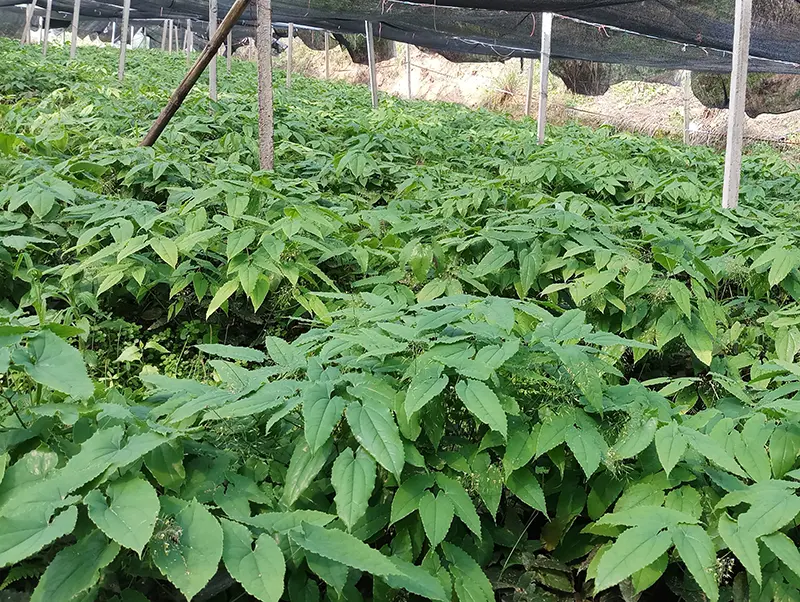
To control botanical source inputs with absolute stability and high quality, our procurement mechanism extends directly to localized farming zones, enabling total traceability for each batch of Berberine and other active ingredients. Storage operates strictly under a standardized warehouse management system where botanical composition, moisture, ash, and potential environmental pollutants are cataloged before extraction.
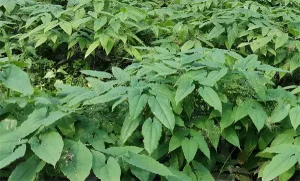
To ensure steady pricing and purity, UniCare collaborates with regional farmers to establish proprietary Ginkgo Biloba planting bases, Epimedium bases, Phellodendron bases, and Olive Leaf bases. Many of these regions operate under strict GACP guidelines. We also work with plant geneticists to screen and cross-breed high-potency seedlings, maximizing active compound density while reducing input costs for downstream global consumers.
Berberine Hydrochloride (C₂₀H₁₈NO₄⁺ · Cl⁻, CAS Registry Number: 633-65-8) is a quaternary ammonium salt belonging to the protoberberine class of benzylisoquinoline alkaloids. Found in roots, rhizomes, and stem barks of various botanical families, it is clinically studied for its influence on human metabolic processes. Structurally, the planar, tetracyclic ring system allows the molecule to intercalate into specific nucleic acid sequences and interact with key regulatory enzymes.
From a pharmacodynamics perspective, the primary pathway of Berberine is the activation of Adenosine Monophosphate-Activated Protein Kinase (AMPK), often described as the metabolic master switch. The downstream effects of AMPK activation include:
The transition from dry bark or root to pharmaceutical-grade Berberine HCl powder requires strict physical-chemical processing. Chinese factories utilize two primary extraction paradigms:
The crude crystals then undergo multiple recrystallization stages using food-grade ethanol and water to remove secondary alkaloids, heavy metals, and residual solvents. The final stage involves vacuum drying and micronization to achieve target mesh sizes (typically 80 to 100 mesh) required for direct compression tableting or high-speed capsule filling.
When procurement managers audit a Berberine HCl powder factory, they must look beyond the standard assay percentage. A robust specification sheet must outline:
| Test Parameters | Acceptance Limits (USP/EP Standards) | Analytical Methodology |
|---|---|---|
| Assay (dry basis) | 97.0% – 102.0% | HPLC (High-Performance Liquid Chromatography) |
| Appearance | Bright yellow crystalline powder | Visual & Organoleptic evaluation |
| Loss on Drying | ≤ 12.0% (hydrated form) | Halogen Moisture Analyzer / Gravimetric |
| Heavy Metals (Pb, As, Hg, Cd) | Lead ≤ 0.5 ppm, Arsenic ≤ 0.5 ppm, Mercury ≤ 0.1 ppm, Cadmium ≤ 0.1 ppm | ICP-MS (Inductively Coupled Plasma Mass Spectrometry) |
| Residual Solvents | Ethanol < 5000 ppm, Methanol < 3000 ppm (Acetone-free preferred) | GC-FID Headspace Analysis |
| Pesticide Residues | Conforms to EC 396/2005 / USP <561> (Multi-residue screen) | LC-MS-MS / GC-MS-MS |
| Ethylene Oxide (EtO) | < 0.01 ppm (Non-detected) | Headspace Gas Chromatography |
The global botanical extracts industry is experiencing rapid growth, and Berberine HCl has emerged as a high-demand ingredient. The primary drivers include:
Addressing key technical, logistical, and quality control queries from international procurement managers.
Pyrrolizidine alkaloids are potential botanical contaminants. We address this at the sourcing stage by enforcing strict weeding standards on our raw material planting bases and conducting comprehensive botanical identification. Additionally, our recrystallization processes systematically separate target protoberberine alkaloids from unwanted alkaloids based on molecular weight and solubility differentials.
The difference lies in the counter-ion bound to the berberine cation. Berberine Hydrochloride (HCl) is the globally preferred pharmaceutical and dietary supplement format due to its higher stability and historical safety profile. Berberine Sulfate is sometimes chosen for specific aqueous formulations, but it possesses a slightly lower density of pure elemental berberine per unit of weight compared to the HCl form.
Yes, absolutely. We regularly arrange for independent audits from recognized global laboratories such as Eurofins, SGS, or NSF. We provide complete batch transparency, supplying COAs (Certificates of Analysis), allergen statements, heavy metal profiles via ICP-MS, and pesticide screening sheets to customers before shipping.
Yes. Our Berberine HCl powder is produced without chemical carriers, artificial preservatives, or anti-caking agents. We use physical mechanical purification rather than synthetic modifiers, ensuring the powder meets European and North American requirements for clean labels.
Premium standardized extracts for nutraceutical, cosmetic, and pharmaceutical applications.