Premium functional botanical active ingredients produced under stringent GMP standards with total batch traceability.
Over the past two decades, China has positioned itself as the epicentre of the global biochemical extraction and industrial fermentation sectors. As food production lines seek cleaner labels, chemical MSG replacements, and robust yeast-based flavor enhancers, Brewers Yeast Extract (BYE) has transitioned from a brewing co-product into a highly sought-after biological matrix.
UniCare stands at the forefront of this industrial revolution. Acting as a professional supplier and leveraging robust, deep-seated alliances with tier-one Chinese manufacturers, we merge high-volume output with strict quality protocols. Our collaborative facilities have established independent laboratory testing ecosystems validated by major certifications like GMP, EUGMP, CEP, ISO9001, ISO22000, and HACCP. By combining plant extraction processes with customized yeast autolysis systems, we supply multiple industries—dietary supplements, functional food, cosmetics, and pharmaceuticals—with stable, high-purity raw materials.

Inside the production capabilities that make China the primary origin for bulk Brewers Yeast Extract.
Equipped with six dedicated 20-ton fermentation tanks specifically tuned for enzymatic modification, cultivation, and autolytic optimization of yeast strains (Saccharomyces cerevisiae).
Processing more than 30,000 tons of medicinal and plant raw materials annually. This includes two high-end GMP-compliant clean rooms housing six multifunctional production lines.
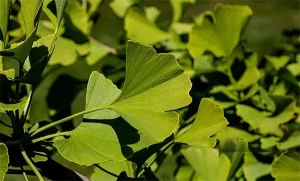
We host the only Ginkgo Biloba Extract acetone process extraction line in China that operates strictly under European Union GMP standards, establishing our high-tech industrial footprint.

We strongly believe that world-class hardware is the prerequisite for consistency. Our manufacturing plants rely entirely on modern, intelligent, automated control systems. This automation controls all phases of extraction and enzymatic digestion—from initial hydration and temperature ramping to centrifuge decanting, membrane filtration, and ultra-high-pressure spray drying.
Understanding the molecular properties and biochemical parameters that dictate the grade and efficacy of Yeast Extracts.
The quality of Brewers Yeast Extract is measured by its chemical composition: protein content, nucleotide ratio, free amino acid profiling, and mineral residue. Unlike basic nutritional yeast, Brewers Yeast Extract (derived as a downstream byproduct of beer fermentation or cultivated primarily via Saccharomyces cerevisiae) must undergo a controlled breakdown of the cell wall.
Our partner factories employ a precise two-stage methodology:
Yeast cells are subjected to plasmolysis using food-grade salts or heat shock. This process permeabilizes the outer cell membrane, releasing endogenous intracellular enzymes (proteases, nucleases, and glucanases) into the cellular broth.
Exogenous food-grade proteases and peptidases are added to break down proteins into highly bioavailable peptides and free amino acids. Specific nucleases are added to convert yeast RNA into 5'-ribonucleotides (guanosine monophosphate - 5'-GMP, and inosine monophosphate - 5'-IMP), maximizing the umami sensation.
High-speed industrial centrifuges remove insoluble cell wall fragments (rich in beta-glucans and mannan-oligosaccharides), yielding a bright, clear liquid extract. The extract is then concentrated via multi-effect falling film evaporators and spray-dried into a fine powder.
Global businesses require partners who can manage complex logistics, dynamic regulatory frameworks, and stable pricing models. China's massive scale allows factories to source quality starting materials and optimize production yields.
Furthermore, through collaborative R&D with the Beijing University of Chemical Technology, UniCare and its partners actively develop new natural fermentation products, upgrading traditional processes, increasing the content of natural bioactive compounds, and bringing down unit costs for bulk ingredients.
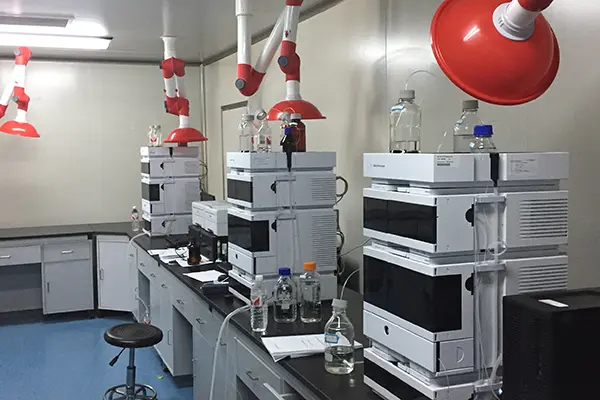
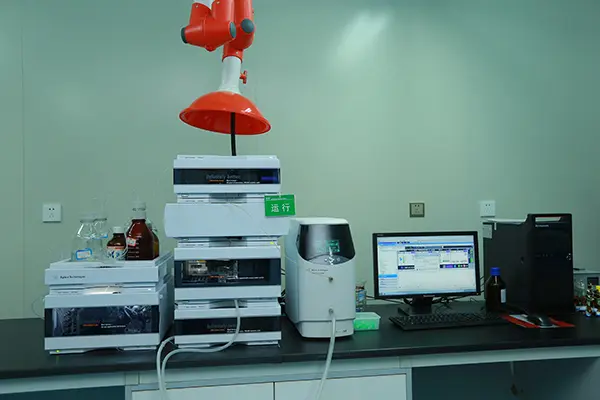
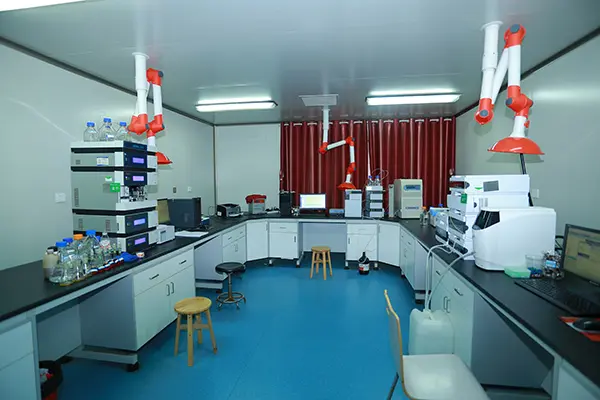
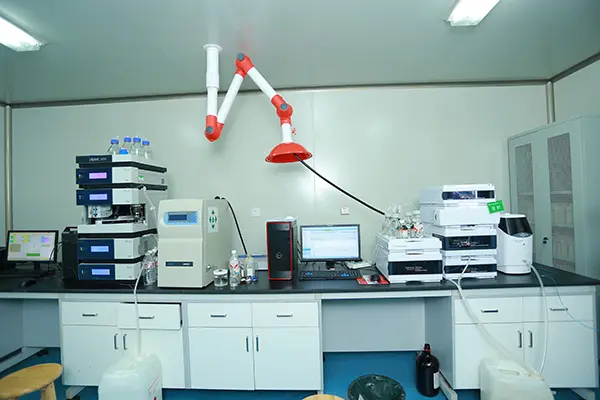
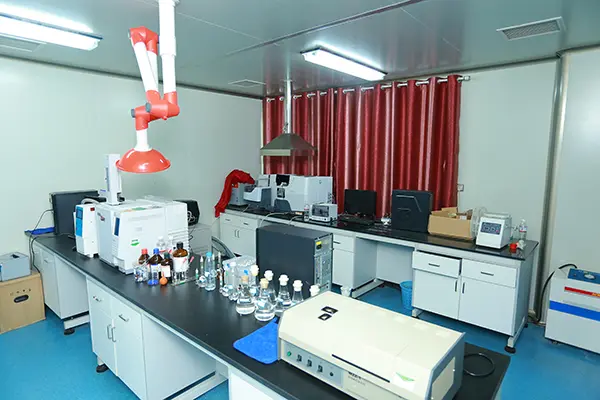
Operating a state-of-the-art CNAS laboratory, testing chemical consistency, purity, and safety across every batch.
Quality control is the foundation of our supply chain. The central laboratory is fully accredited by CNAS, operating advanced analytical machinery to monitor every safety parameter. Detectable items include: signature component assays (HPLC or UV), gas chromatography (GC) for solvent residues, GC-MS-MS for organochlorine pesticide residues, and ICP-MS for heavy metals (lead, arsenic, mercury, cadmium, copper).
Additionally, we conduct routine testing for microbial limit counts, moisture content, ash, sulfur dioxide residue, pH, bulk density, particle size distribution, and optical rotation.
| Analysis Type | Detailed Parameters & Test Methods |
|---|---|
| Active Ingredient Assays | HPLC, UHPLC, or UV-Vis spectrophotometry to determine chemical purity and compound percentages. |
| Contaminant Testing | GC-MS-MS for multi-residue pesticides; ICP-MS for trace metals (As, Pb, Cd, Hg, Cu). |
| Microbiological Profiling | Total Plate Count (TPC), Yeast & Mold, E. Coli, Salmonella, and specific pathogen testing. |
| Physical & Chemical Properties | Loss on drying (moisture), total ash, pH, particle size, bulk/tapped density, and powder solubility. |
| Stability Profiling | Long-term and accelerated climate-chamber testing to establish and verify shelf-life data. |
| Regulatory Verification | Continuous compliance checking against EU, US FDA, and Chinese pharmacopoeia standards. |
How Brewers Yeast Extract and companion botanical compounds serve global supply chains.
Providing flavor modulation, salt-reduction solutions, and natural MSG replacement for clean-label soups, sauces, snacks, and savory seasonings worldwide.
Supplying bioavailable beta-glucans and mannan-oligosaccharides (MOS) to enhance gut morphology, prevent pathogen colonization, and boost immunity in aquaculture and poultry feed.
Acting as an organic nitrogen, vitamin, and amino acid source for laboratory microbial cultivation, industrial fermentation, and recombinant protein production.
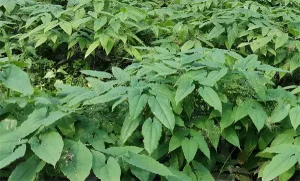
To ensure the chemical stability of our botanical and plant extracts, UniCare has built vertical integrations reaching back to cultivation. We work directly with local farmers to manage planting bases for crucial herbs, including Ginkgo Biloba leaf, Epimedium, Phellodendron, and Olive Leaf.
These agricultural operations follow the Good Agricultural and Collection Practice (GACP) model, controlling factors like pesticide use, soil heavy metals, and harvest timing. In addition, we partner with specialized seedling R&D companies to cultivate high-active-ingredient plant varieties, helping reduce processing costs and lower product prices for our customers.
Technical answers to common sourcing questions about Brewers Yeast Extract and botanical ingredients.
Explore our full range of standardized botanical extracts, manufactured to international quality and safety standards.