Explore our elite selection of standard botanical compounds, engineered for high-performance dietary supplements and cosmetics.
A technical examination of extraction demand, active constituents, and industrial processing trends.
Aloe Vera Leaf Extract is a cornerstone raw material in the global cosmetics, pharmaceutical, and functional food sectors. Valued for its diverse therapeutic profile, the market requires precise control over its primary bioactive polymers—specifically acemannan (a beta-1,4-acetylated glucomannan)—while minimizing toxicological constituents such as anthraquinones (aloin A and B) to below regulatory detection limits (often < 0.1 ppm for oral consumption).
Modern industrial applications demand various stabilization formats of this extract. Top-tier global factories primarily manufacture three standard concentrations: Aloe Vera Freeze-Dried Powder 200:1, Aloe Vera Spray-Dried Powder 100:1, and stabilized decolorized liquid gels. The challenge for modern raw material exporters is preserving the high molecular weight of the polysaccharides during processing, as structural shear or heat degradation significantly curtails the material's immunomodulatory and skin-barrier restoring efficacy.
As regulatory frameworks like the European Commission and U.S. FDA enforce stricter limits on aloin content in finished goods, manufacturers are pivoting toward advanced membrane separation, enzymatic digestion, and low-temperature vacuum concentration. Selecting a supplier with validated analytical reporting is crucial for compliance and brand reputation.

Engineered routes to maximizing polysaccharide integrity and ensuring complete aloin removal.
Using proprietary activated carbon columns or advanced membrane ultrafiltration, modern factories strip away irritating anthraquinones (aloin). This process yields a clear, stable decolorized liquid gel without degrading the sensitive acemannan structures.
High-efficiency membrane concentration operates at ambient temperatures, reducing thermal exposure. By utilizing selective cut-off thresholds, we retain bioactive compounds with molecular weights greater than 50,000 Daltons, concentrating the active ingredients before dehydration.
For the ultimate 200:1 powder active, vacuum freeze-drying is utilized. This sublimation process prevents polysaccharide denaturation. Alternatively, high-throughput spray drying at optimized inlet temperatures is utilized for the standard 100:1 powders, ensuring optimal solubility.
How domestic infrastructure, agricultural integration, and automated factories yield superior cost-to-potency ratios.

The global dominance of Chinese extraction factories in the botanical space rests on key structural strengths: vertically integrated agricultural bases, high-throughput processing equipment, and strategic transport networks. In provinces like Yunnan and Hainan, large-scale cultivation zones yield high-acemannan species (primarily Aloe barbadensis Miller) processed within hours of harvesting to minimize enzymatic degradation.
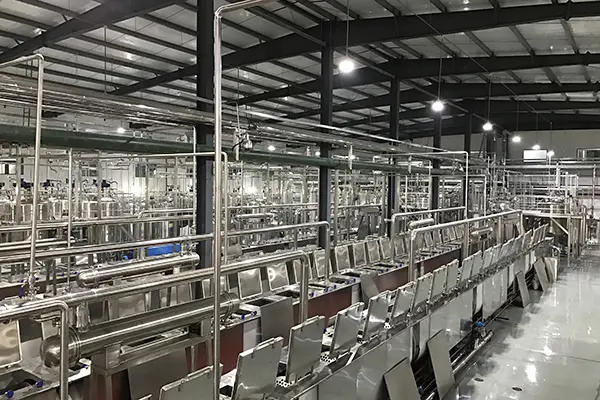
Chinese factories leverage advanced automation. Multi-functional countercurrent extraction lines and continuous concentration loops run 24/7, reducing thermal degradation and batch variance. This level of scale provides a stable supply chain immune to seasonal shortages.
Furthermore, China's extensive transportation network ensures rapid delivery to international ports (such as Shanghai, Qingdao, and Shenzhen). Integrated logistics platforms provide real-time thermal tracking, preserving temperature-sensitive products like freeze-dried powders throughout transit.
An established, GMP-compliant leader in natural active ingredients and advanced botanical extraction systems.
UniCare is a professional supplier of natural active ingredients. Our products are widely used in various fields such as dietary supplement, food, cosmetics and pharmaceuticals. We focus on product development and quality stability, and insist on growing together with our customers around the world.
UniCare has deep cooperation with several excellent Chinese manufacturers who have complete quality management system certifications, including but not limited to GMP, EUGMP, CEP, ISO9001, ISO22000, and HACCP. Each factory has independent testing capabilities and is equipped with advanced and efficient testing equipment to ensure the high quality and long-term stability of each batch of products.

UniCare attaches great importance to the hardware conditions of production equipment and has the largest and most advanced extraction factory in China. The entire production line in UniCare is controlled by a modern, intelligent, automatic control system.
The processing factory has passed the China GMP certification, maintaining sterile pathways and air handling systems that meet rigorous food and pharmaceutical regulations.
The EU-GMP and CEP of Ginkgo Biloba Extract has been certificated. We own the only acetone process extraction line for Ginkgo Biloba Extract in China that meets the EU GMP standards.
A total of 30,000 tons of various Chinese medicine plant raw materials can be processed each year, offering scalable supply agreements to international brands.
Includes three annular dynamic countercurrent extraction lines (10 tons & 15 tons), two multi-functional extraction lines (32 extraction tanks with six cubic each), and one round dynamic countercurrent extraction line (10 tons).
We operate six fermentation tanks with 20 tons capacity each. This specialized setup supports natural fermentation and the production of enzyme-modified products.
Annual Processing Capacity
High-Capacity Extraction Lines
Compliance Standards Met
Fermentation Tank Capacity

Discover and create the new value of herbs.

Continuous innovation and process improvement.

Using state-of-the-art technology to produce the highest quality products.
UniCare operates a comprehensive quality control system to ensure regulatory safety and batch-to-batch consistency.
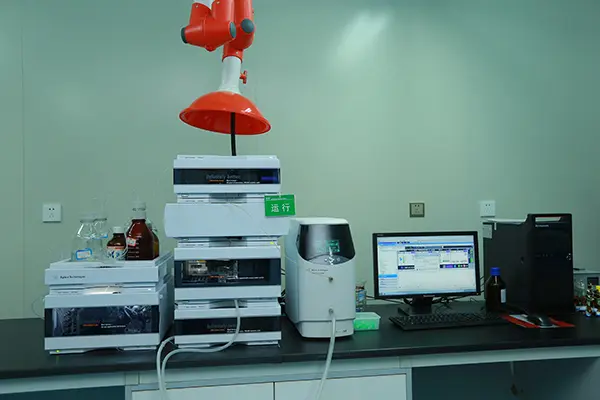
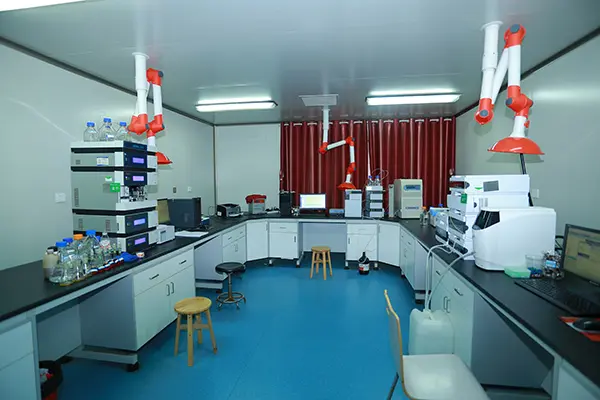
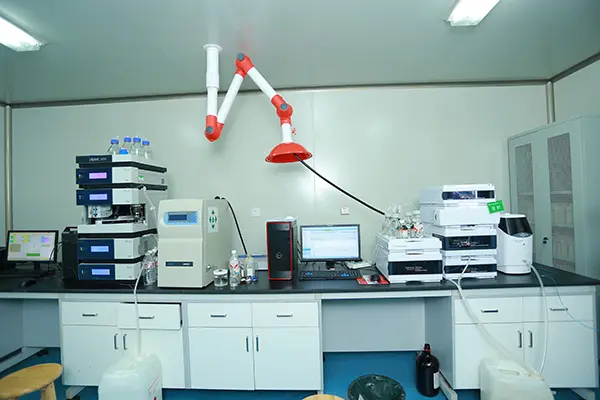
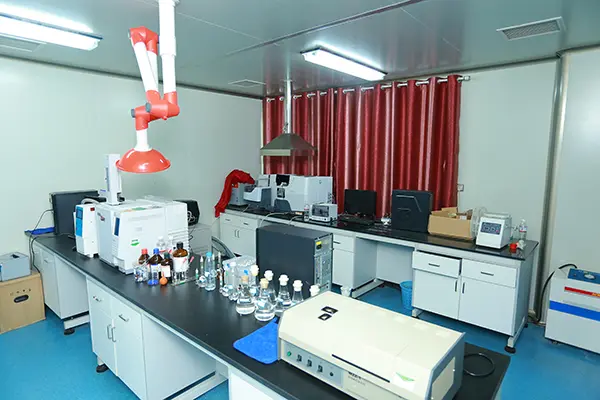
United New Life (UniCare's partner infrastructure) has established a leading and complete quality control system, and strictly controls the high quality of products in accordance with the quality system. With advanced testing instruments, we provide every customer with high quality products.
Detectable items include: Signature component detection (HPLC or UV), solvent residues (GC), pesticide residues (organochlorine detection GC-MS-MS), heavy metals (lead, arsenic, mercury, cadmium, copper by ICP-MS), microscopic identification, moisture, dry weight loss, ash, microbial limits, thin layer identification, weighing, conductivity, pH, sulfur dioxide residue, and other routine parameter detections.
Our Central Laboratory spans a significant layout and is qualified by CNAS. This setup ensures that international standards (ISO/IEC 17025) are maintained across all operational testing cycles.
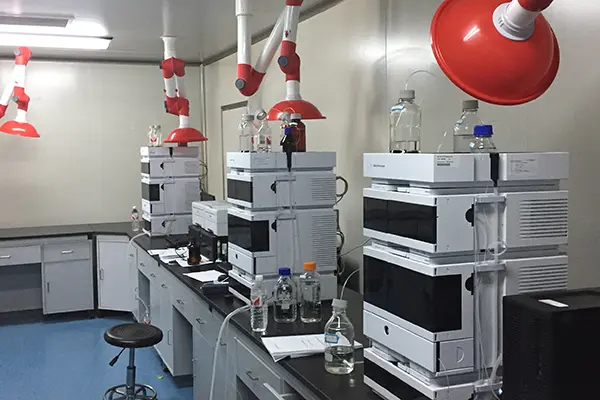
| Instrument Category | Specific Brand & Model | Analytical Application |
|---|---|---|
| Ultra-High Performance Liquid Chromatography (UHPLC) | Agilent 1290 (×2) | Ultra-fast, high-resolution quantification of active markers and traces. |
| High Performance Liquid Chromatography (HPLC) | Agilent 1260 (×4) | Standard assay validation, signature component detection. |
| High Performance Liquid Chromatography (HPLC) | Shimadzu LC-20AT (×2) | Routine purity analysis and batch control. |
| High Performance Liquid Chromatography (HPLC) | Dionex CU3000 (×2) | Polysaccharide sizing and carbohydrate distribution. |
| Evaporative Light Scattering Detector (ELSD) | Shimadzu 2000ES (×2) | Analysis of compounds lacking strong chromophores (lipids, carbohydrates). |
| Gas Chromatograph (GC) | Shimadzu GC-2010 (×1) | Solvent residual analysis and volatile impurities. |
| Atomic Absorption System (AAS) | Shimadzu AA-7000 (×1) | Trace heavy metal analysis (Pb, As, Hg, Cd). |
| Control Category | Testing Methods & Parameters Covered |
|---|---|
| Active Ingredient Analysis | Assay, identification (HPLC, UV, TLC verification) |
| Hazardous Substance Analysis | Heavy metals (ICP-MS), pesticide residue (GC-MS-MS), solvent residue (GC) |
| Microbe Analysis | Bacterium count, Escherichia coli, Yeast & mould, specific microbial tests |
| Raw Material Control | Pesticide residue, allergy origin, GMO, origin of raw material traceability |
| Laws & Regulations Confirmation | Investigation and research of laws and regulations of China and destination import nations |
| Stability Test | Guarantee the shelf life according to real-time and accelerated stability studies |
| Others | pH value, moisture, ash, optical rotation, particle size, bulk density, etc. |
From genomic optimization of seedlings to strategic university collaborations in advanced bioprocessing.
UniCare invests 10% of our annual net profit in research and development. In addition to optimizing and developing the existing natural plant extraction processes, we have also established a professional R&D department for natural fermentation products. By increasing investment in natural fermentation products, we try to break through traditional processes and disrupt industry development.
UniCare has deep cooperation with Beijing University of Chemical Technology in the field of fermentation, jointly developing and transforming new raw materials for pharmaceutical, cosmetic, and natural health products into mass-produced products.
In order to control raw materials more efficiently and with higher quality, a raw material procurement system has been established, which extends procurement to every piece of planting land and can trace the raw materials of each batch of products. The storage of raw materials is operated according to the advanced quality management system process, and the content of active ingredients, moisture, ash, heavy metals, pesticide residues and other items of raw materials are strictly controlled.
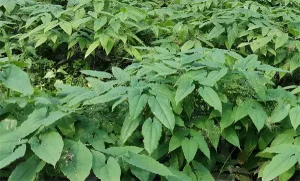
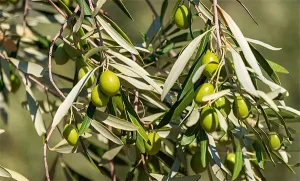
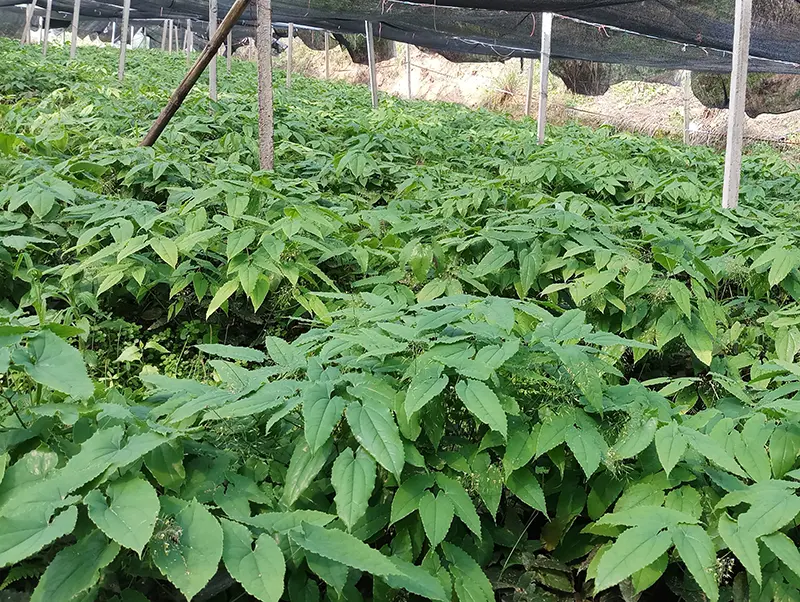
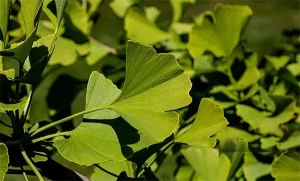
At the same time, in order to further ensure the high quality of important products, UniCare cooperated with planting farmers to establish ginkgo leaf planting bases, epimedium planting bases, phellodendron planting bases, olive leaf planting bases, etc. Some of these bases are planted strictly in accordance with the GACP management model. In addition, we cooperate with seedling research and development companies to develop high-content seedling cultivation, and cultivate better seedlings through hybridization or gene optimization, so as to continuously reduce unit costs to benefit users.
How distinct product specifications translate to optimal product stability and performance.
Recommended Spec: Aloe Vera Freeze-Dried Powder 200:1 (Decolorized)
Used to calm sensitive skin, reconstruct the epidermal lipid barrier, and provide deep hydration. Highly compatible with hyaluronic acid and niacinamide bases. Zero aloin content guarantees irritation-free performance in clinical-grade dermaceuticals.
Recommended Spec: Aloe Vera Spray-Dried Powder 100:1 / 200:1
Formulated into capsules and tablets aimed at protecting the gastric mucosa and aiding digestive wellness. Polysaccharides promote beneficial gut flora. Complete absence of anthraquinones prevents laxative side effects.
Recommended Spec: Soluble Aloe Vera Gel Concentrate (Decolorized)
Ideal for clear wellness beverages, functional shots, and gel-caps. Rapid cold-water solubility and heat stability ensure clarity and prevent sedimentation in ready-to-drink (RTD) formulations.
Navigating import standards and compliance for hassle-free entry into global consumer markets.
Regulatory bodies worldwide have set strict limits on dietary and cosmetic aloe preparations. In the European Union, Commission Regulation (EU) 2021/468 bans certain hydroxyanthracene derivatives (including aloin) in foods due to safety profiles. The FDA enforces strict limits on aloin content in functional foods and OTC preparations.
To support global supply chains, UniCare and its partners provide comprehensive compliance documentation with every shipment, including:
Our regulatory team updates specifications dynamically as global safety standards evolve, ensuring your supply chain remains compliant and resilient.
Answers to key considerations in sourcing, testing, and incorporating botanical extracts.
Expand your formulations with our range of standardized extracts, manufactured under strict GMP controls.