High-potency botanical extracts refined through state-of-the-art dynamic countercurrent extraction processes.
Demystifying the phytochemical matrix and the transition from natural foods to concentrated industrial extracts.
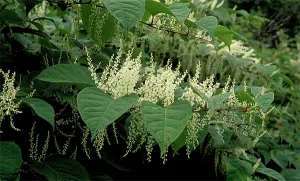
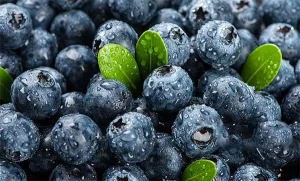
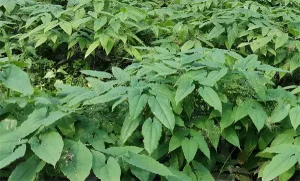
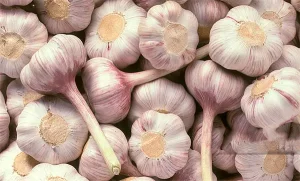
Vitamin P is not a single, isolated vitamin in the classical sense; rather, it is a comprehensive terms coined to identify bioflavonoids. These are biologically active polyphenolic compounds synthesized by plants as secondary metabolites. Chemically, they consist of a 15-carbon skeleton arranged in two benzene rings connected by a heterocyclic pyran ring. Bioflavonoids are highly concentrated in certain plant foods, including citrus fruits, rosehips, green tea, berries, onions, and various herbal medicines such as Ginkgo Biloba and Epimedium. Historically recognized for their synergy with Vitamin C to bolster vascular integrity, modern pharmacological research shows that bioflavonoids serve as powerful antioxidant, anti-inflammatory, and neuroprotective agents.
From an industrial perspective, supplying the global demand for "Vitamin P foods" requires transition from basic agricultural processing to highly controlled phytochemistry. Standardized botanical extracts, such as Quercetin, Rutin, Fisetin, and Epimedium Flavonoids, provide clinical effectiveness that raw agricultural products cannot achieve. Multi-national nutrition brands, cosmetics developers, and pharmaceutical enterprises depend on reliable B2B supply chains that guarantee exact active ingredient content, stable solubility metrics, and compliance with rigid sanitary standards.
1. Capillary Permeability Regulation: Preventing microscopic microvascular leakage by supporting endothelial cell function.
2. Advanced ROS Scavenging: Neutralizing reactive oxygen species to reduce cellular oxidative stress and lipid peroxidation.
3. Cytokine Modulation: Intercepting pro-inflammatory pathways (such as NF-kB and TNF-alpha activation) to modulate systemic inflammation.
Analyzing market drivers, procurement channels, and international supply security in the plant-extract industry.
The global bioflavonoid market is expanding rapidly, driven by rising consumer demand for clean-label, plant-derived products. As clinical trials continue to validate the health benefits of phytochemicals for cellular longevity and metabolic wellness, the transition toward standardized extracts is accelerating. The global business infrastructure relies heavily on advanced manufacturing clusters located in resource-rich cultivation hubs, notably in China. Chinese manufacturers have established an integrated supply chain that links high-yield farming regions with state-of-the-art technological processing hubs.
However, exporting these raw active ingredients involves significant regulatory and technical hurdles. Exporters must comply with stringent phytosanitary laws, pesticide residue limits, and complex domestic safety certifications in key regions such as the United States (FDA GRAS regulations) and the European Union (Novel Food guidelines). Reliable supply partnerships are defined by transparent trace-back documentation (from field to final extract), robust supply continuity plans, and consistent batch-to-batch chemical signatures.

UniCare is a professional supplier of natural active ingredients. Our products are widely used in various fields such as dietary supplement, food, cosmetics and pharmaceuticals. We focus on product development and quality stability, and insist on growing together with our customers around the world.
UniCare has deep cooperation with several excellent Chinese manufacturers who have complete quality management system certifications, including but not limited to GMP, EUGMP, CEP, ISO9001, ISO22000, and HACCP. Each factory has independent testing capabilities and is equipped with advanced and efficient testing equipment to ensure the high quality and long-term stability of each batch of products.
 Contact Us





UniCare attaches great importance to the hardware conditions of production equipment and has the largest and most advanced extraction factory in China. The entire production line in UniCare is controlled by a modern, intelligent, automatic control system.
Until now, UniCare has built up two GMP workshops, containing six multi-functional extraction lines, among which there is the only production line for Ginkgo Biloba Extract of acetone process in the whole China. Here are several other production lines including fermentation production lines and Chinese medicine pieces. A total of 30,000 tons of various Chinese medicine plant raw materials can be processed each year.

The factory has passed the rigorous China GMP certification standards.

The EU-GMP and CEP of Ginkgo Biloba Extract has been certified for global supply.

All extraction production lines adopt modern, intelligent and automated control systems.

Own the most advanced extraction equipment in China for optimal recovery.

Annual processing of 30,000 tons of Chinese medicine and plant raw materials.

Six production lines: 3 annular dynamic countercurrent lines (10t/15t); 2 multi-functional lines (32 tanks x 6m³); 1 round dynamic countercurrent line (10t).

Own the only acetone process extraction line for Ginkgo Biloba Extract in China that meets EU GMP standards.
Own six fermentation tanks (20 tons capacity each) for the production of enzyme-modified products.
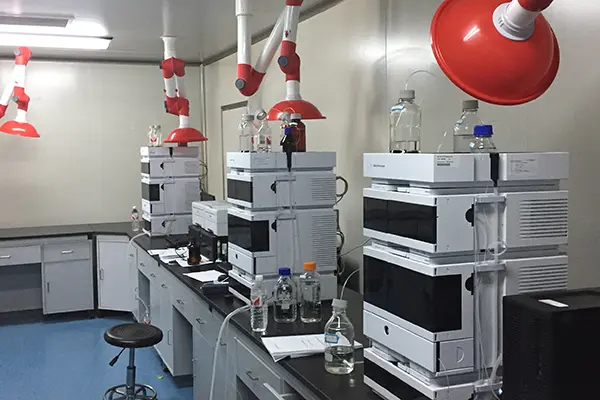
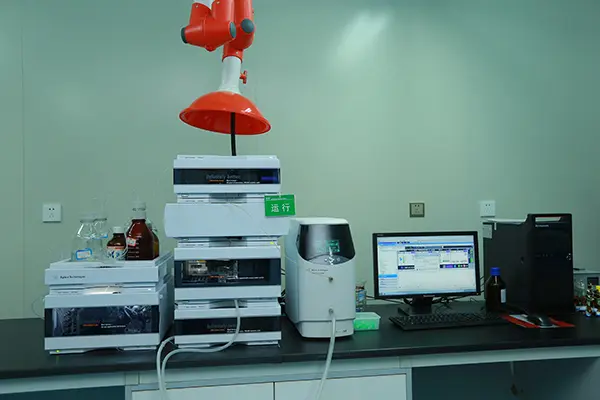
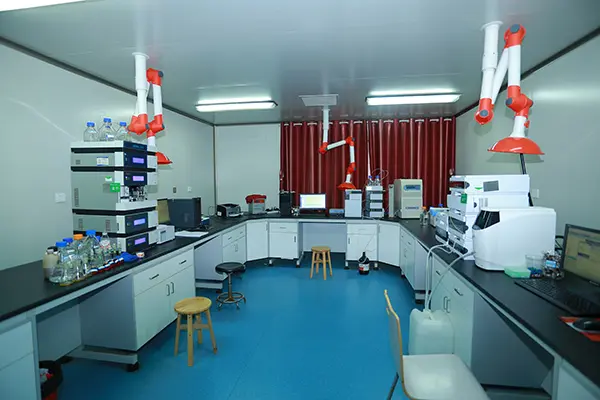
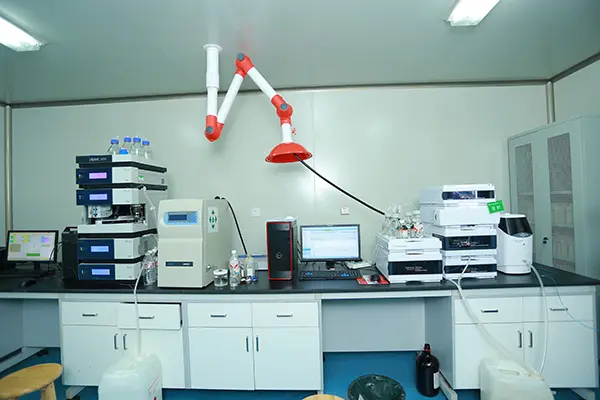
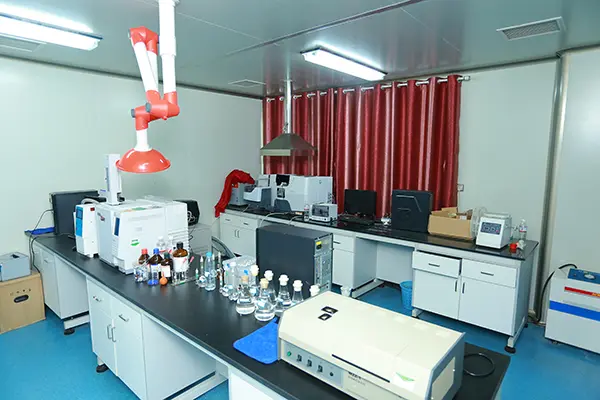
Rigid laboratory validation processes utilizing world-class analytical instrumentation.
United New Life (UniCare) has established a leading and complete quality control system, and strictly controls the high quality of products in accordance with the quality system. With advanced testing instruments, strict control of product quality, to provide every customer with high quality products.
Detectable items include: Signature component detection (HPLC or UV), solvent residues GC, pesticide residues (organochlorine detection) GC-MS-MS, heavy metals (lead, arsenic, mercury, cadmium, copper) ICP-MS microscopic identification, moisture, dry weight loss, ash, microbial limits, thin layer identification, weighing, conductivity, PH, sulfur dioxide residue, routine detection, etc.
Important testing instruments in operation: Two UHPLC Agilent 1290 ultra-high performance liquid chromatographs, four HPLC Agilent 1260 high performance liquid chromatography sets, two HPLC Shimadzu LC-20AT high performance liquid chromatograph, two HPLC Diane CU3000, two Shimadzu evaporative light scattering detector 2000ES, one Shimadzu GC2010 gas chromatograph, and one Shimadzu AA-7000 atomic absorption system.
| Analytical Category | Specific Test Items & Scope |
|---|---|
| Active Ingredient Analysis | Assay, chemical fingerprinting, TLC identification |
| Hazardous Substance Analysis | Heavy metals (ICP-MS), pesticide residue (GC-MS-MS), solvent residue (GC) |
| Microbe Analysis | Total viable count, Escherichia coli, Yeast & mould, specific pathogen testing |
| Raw Material Control | Pesticide residue trace-back, allergen identification, GMO screening, plant origin verification |
| Laws & Regulations Confirmation | Continuous alignment with GB (China), USP (USA), EP (Europe), and JP (Japan) regulatory updates |
| Stability Test | Real-time and accelerated stability evaluation to guarantee shelf life |
| Others | pH value, moisture, ash, optical rotation, particle size, bulk density, etc. |
| Instrument Type | Configuration Details | Primary Testing Application |
|---|---|---|
| UHPLC, Agilent 1290 | 2 Systems | High-throughput quantitative profiling & rapid assay of active metabolites |
| HPLC, Agilent 1260 | 4 Systems | Standard component analysis, bioflavonoid purity checks |
| HPLC, Shimadzu LC-20AT | 2 Systems | Standard assay validation & method development compliance |
| ELSD, Shimadzu 2000ES | 2 Systems | Analysis of compounds without UV absorption (e.g., saponins, lipids) |
| Shimadzu GC-2010 | 1 System | Residual solvent monitoring & volatile compound chromatography |
| Shimadzu AA-7000 | 1 System | Heavy metal detection (Pb, Cd, Hg, As, Cu) via atomic absorption |
From agricultural cultivation control under GACP guidelines to advanced molecular transformations.

UniCare invests 10% of our annual net profit in research and development. In addition to optimizing and developing the existing natural plant extraction process, we have also established a professional R&D department for natural fermentation products. By increasing investment in natural fermentation products, we try to break through the traditional processes and disrupt industry development.
UniCare has deep cooperation with Beijing University of Chemical Technology in the field of fermentation, jointly developing and transforming the new raw materials of pharmaceutical, cosmetic, and natural health products into mass-produced products.
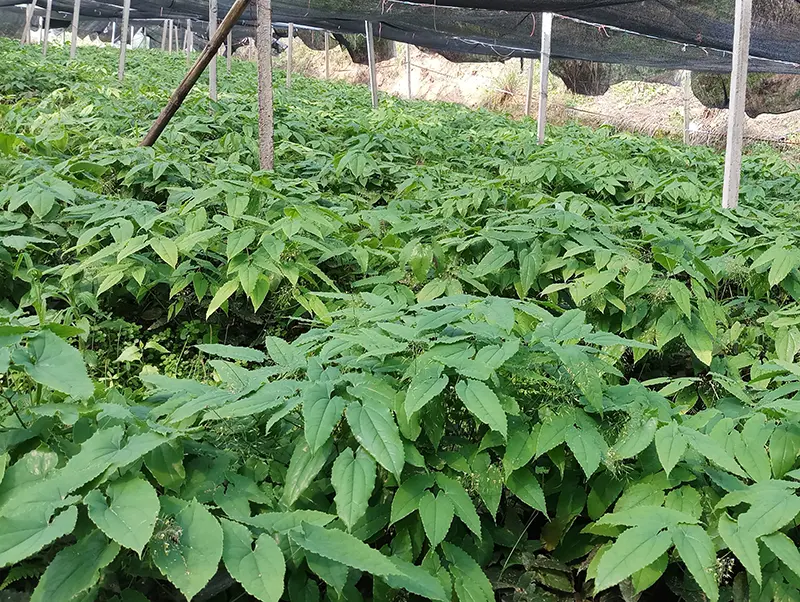
In order to control raw materials more efficiently and with higher quality, a raw material procurement system has been established, which extends procurement to every piece of planting land and can trace the raw materials of each batch of products. The storage of raw materials is operated according to the advanced quality management system process, and the content of active ingredients, moisture, ash, heavy metals, pesticide residues and other items of raw materials are strictly controlled.
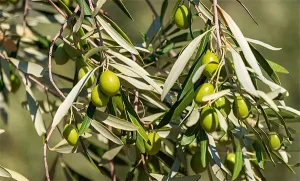
At the same time, in order to further ensure the high quality of important products, UniCare cooperated with planting farmers to establish ginkgo leaf planting bases, epimedium planting bases, phellodendron planting bases, olive leaf planting bases, etc. Some of these bases are planted strictly in accordance with the GACP management model. In addition, we cooperate with seedling research and development companies to develop high-content seedling cultivation, and cultivate better seedlings through hybridization or gene optimization.
Translating active bioflavonoids into market-ready applications across global sectors.
Phytochemical active ingredients derived from the "Vitamin P Foods List" are widely used across four major industrial sectors. Our raw materials are customized to meet the distinct rheological, stability, and absorption profiles required by each category:
High-potency capsule, tablet, and powder formulations. Featuring standardized flavonoids like Quercetin, Rutin, and Resveratrol to support cardiovascular health, immune response, and cellular defense.
Active skin-care formulations utilizing polyphenol complexes (e.g., Green Tea Extract, Ginkgo Biloba) to soothe inflammation, scavenge free radicals, and prevent photo-aging.
Water-soluble plant extracts tailored for functional beverages, sports drinks, and wellness foods. Designed to maintain stability, clarity, and biological activity throughout their shelf-life.
Pure phytochemical intermediates (such as Berberine HCl, Fisetin) refined under GMP guidelines for active pharmaceutical ingredient (API) synthesis and clinical-stage research.
Continuous investment in next-generation green extraction and enzymatic engineering.
To reduce production costs, lower environmental impact, and improve bioavailability, UniCare executes a multi-generational technical roadmap that combines traditional chemical extraction with modern biotechnology:
Upgrading facilities to closed-loop dynamic countercurrent extraction systems. Replacing petrochemical solvents with eco-friendly alternatives (ethanol, water, subcritical CO2) to lower carbon emissions.
Using our six 20-ton fermentation units to perform targeted enzymatic modification. This process converts complex plant glycosides into highly bioavailable aglycones (such as transforming Rutin to Quercetin).
Collaborating with the Beijing University of Chemical Technology to construct metabolic yeast and E. coli strains. This allows us to produce rare bioflavonoids through scale-up fermentation, bypassing agricultural land limitations.
Addressing technical, quality assurance, and global supply chain questions for B2B procurement managers.
Vitamin P is a historical term for plant-derived bioflavonoids. The main industrial compounds include Rutin, Quercetin, Fisetin, Resveratrol, Ginkgo Biloba Flavone Glycosides, and Grape Seed Proanthocyanidins.
We standardize our processes through computerized automated extraction lines and complete fingerprint profiling using Agilent 1290 UHPLC. Each batch is released with a Certificate of Analysis (COA) detailing active assay levels, moisture content, and impurity profiles.
Yes, we extend procurement directly to the farming regions. We operate dedicated planting bases for Ginkgo Biloba, Epimedium, Phellodendron, and Olive Leaf under GACP rules to ensure clean, pesticide-free starting materials.
Our collaborative factories maintain complete quality systems, including China GMP, EUGMP, CEP (for Ginkgo Biloba Extract), ISO9001, ISO22000, and HACCP compliance certifications.
Every batch undergoes rigorous screening in our CNAS laboratory. We utilize ICP-MS (Shimadzu AA-7000) for heavy metals and GC-MS-MS for organochlorine and other chemical pesticide residues to ensure compliance with EP and USP guidelines.
We operate some of the largest extraction facilities in China, with an annual capacity to process up to 30,000 tons of raw botanicals across six multi-functional production lines.
High-purity botanical raw materials for pharmaceutical, nutracosmetic, and supplement formulations.