Explore our core catalog of standardized plant extracts, produced under strict GMP guidelines and validated by advanced analytical instrumentation.

UniCare is a professional, technology-driven supplier of natural active ingredients. Our premium products are widely utilized in various demanding fields such as dietary supplements, functional foods, cosmetics, and pharmaceuticals. We focus intensely on product development and quality stability, insisting on growing together with our customers around the world through trust, transparency, and scientific rigor.
UniCare has deep cooperation with several excellent Chinese manufacturers who have complete quality management system certifications, including but not limited to GMP, EU-GMP, CEP, ISO9001, ISO22000, and HACCP. Each factory has independent testing capabilities and is equipped with advanced and efficient testing equipment to ensure the high quality and long-term stability of each batch of products.

Driven by innovation, governed by science, and committed to ecological and human well-being.

Unlocking the hidden bio-activities of botanicals to develop superior applications for human health and longevity.

Refining extraction procedures continually to maximize active yields, reduce environmental impacts, and lower customer costs.

Operating premium industrial apparatus under digital automated controls to produce the market's highest quality plant metabolites.

Supporting local agricultural ecosystems and planting farmers while maintaining sustainable, low-carbon manufacturing lines.
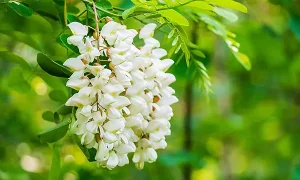
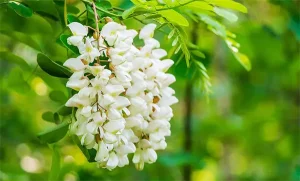
Quercetin (3,3',4',5,7-pentahydroxyflavone), a naturally occurring polyphenolic flavonoid compound abundant in Sophora japonica (Japanese Pagoda Tree) flower buds, has become a cornerstone active ingredient in the global health and wellness sector. As consumer interest in cellular resilience, metabolic support, and respiratory health accelerates, commercial procurers must navigate a complex ecosystem of global suppliers, extraction technologies, and regulatory requirements. This whitepaper analyzes the essential variables that formulators and purchasing directors must evaluate when determining where to buy bulk Quercetin.
Historically, the widespread clinical and commercial application of pure Quercetin dihydrate has been hindered by its low water solubility and corresponding low systemic bioavailability. To bypass this botanical constraint, UniCare's collaborative R&D pipeline is focused on three advanced technical pillars:
From an enterprise perspective, a reliable Quercetin exporter must provide distinct ingredient formats tailored to the final dosage medium. We specialize in customizing the physical properties of our powders to match these diverse application demands:
| Application Industry | Formulation Format | Recommended Quercetin Specification | Key Optimization Parameters |
|---|---|---|---|
| Dietary Supplements | Two-piece hard capsules, tablets | 95% HPLC Quercetin Dihydrate (Standard or Micronized) | Bulk density, flowability, low excipient requirements |
| Functional Food & Beverage | Instant drink powders, functional gummies | EMIQ / Water-Soluble Quercetin Complexes | Taste masking, clarity in solution, thermal stability |
| Cosmeceuticals & Topical Care | Anti-aging creams, barrier serums | 98% Anhydrous Quercetin / Liposomal Quercetin | Dermal permeation, color stability, low irritation profile |
| Pharmaceutical API | Clinical preparations | USP/EP Grade Ultra-Pure Quercetin | Strict residual solvent limits, high polymorphic purity |
How UniCare bridges state-of-the-art agricultural management with automated, large-scale plant extraction.

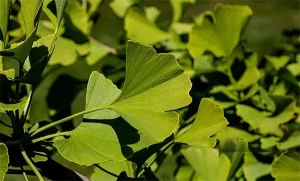
UniCare attaches great importance to the hardware conditions of production equipment and has the largest and most advanced extraction factory in China. The entire production line in UniCare is controlled by a modern, intelligent, automatic control system. Until now, UniCare has built up two GMP workshops, containing six multi-functional extraction lines, among which there is the only production line for Ginkgo Biloba Extract of acetone process in the whole China. Here are several other production lines including fermentation production lines and Chinese medicine pieces. A total of 30,000 tons of various Chinese medicine plant raw materials can be processed each year.

The manufacturing facility has passed strict national GMP assessments, ensuring all operations align with pharmaceutical-grade standards.

Our Ginkgo Biloba Extract holds EU-GMP and CEP certifications, proving our competence to meet rigorous European regulatory requirements.

All extraction production lines adopt modern, intelligent, and automated control systems to eliminate batch-to-batch human errors.

We own the most advanced commercial extraction equipment in China, designed to maximize purity while protecting thermo-sensitive actives.

Robust raw material processing capacity of 30,000 tons annually, guaranteeing continuous supply even during volatile market fluctuations.

Equipped with three annular dynamic countercurrent lines (10t & 15t), two multi-functional lines (32 x 6m³ tanks), and one round dynamic countercurrent line (10t).

We operate the only acetone process extraction line for Ginkgo Biloba Extract in China that fully meets EU GMP standards.
Six large fermentation tanks (20 tons capacity each) dedicated to generating enzyme-modified compounds with enhanced biological activities.
Securing raw material quality from the seed to the final packaged active compound.

UniCare invests 10% of our annual net profit in research and development. In addition to optimizing and developing the existing natural plant extraction processes, we have established a professional R&D department for natural fermentation products. By increasing investment in natural fermentation solutions, we strive to break through traditional extraction thresholds and introduce disruptively clean bio-processes.
To accelerate these scientific transformations, UniCare maintains a deep academic and research cooperation with the Beijing University of Chemical Technology in the field of industrial fermentation. Together, we develop and scale up innovative active compounds for pharmaceutical, cosmetic, and nutritional products, converting laboratory breakthroughs into reliable, mass-produced health solutions.
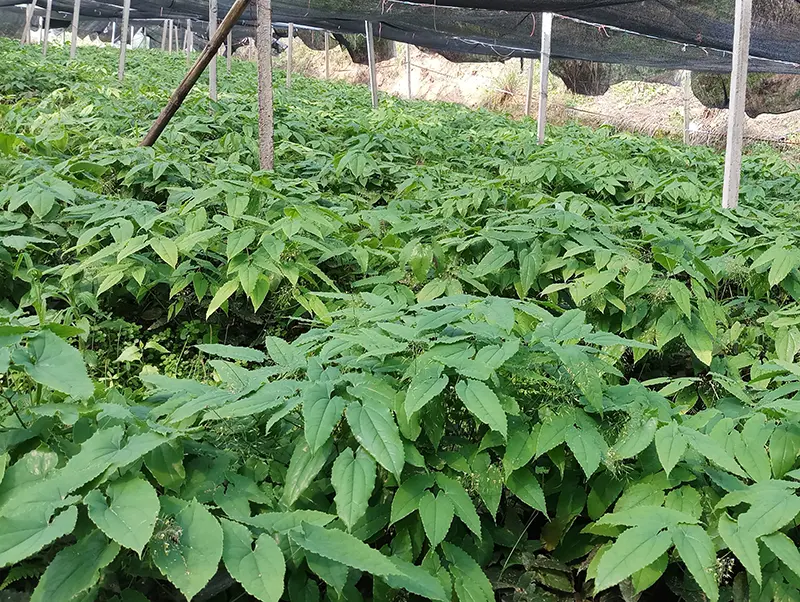
To control raw material quality at the source, UniCare has built a comprehensive raw material procurement system that traces materials back to individual agricultural plots. Our raw material storage centers operate under rigorous quality management protocols, screening incoming plant materials for active marker content, moisture, ash, heavy metals, and pesticide residues prior to processing.
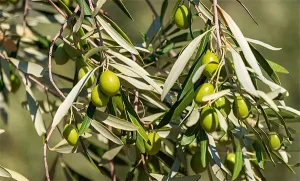
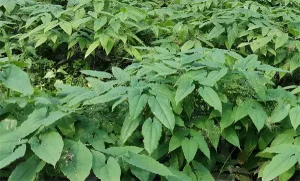
To guarantee the supply security of major products, UniCare cooperates closely with farming collectives to establish dedicated ginkgo leaf planting bases, epimedium planting bases, phellodendron planting bases, and olive leaf planting bases. Many of these regions are managed in strict compliance with the GACP (Good Agricultural and Collection Practice) model. We also partner with botanical research companies to cultivate high-yield seedlings through selective hybridization and gene optimization, lowering processing costs while improving efficiency.
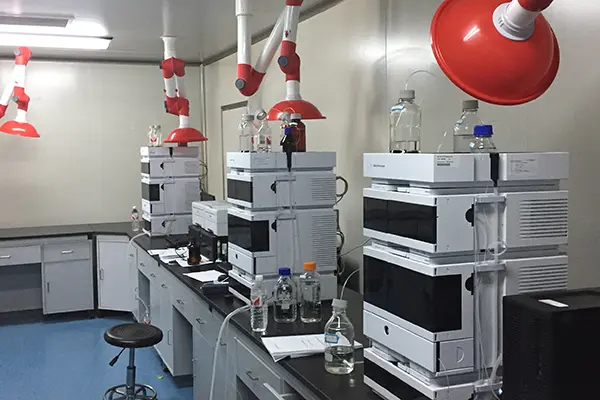
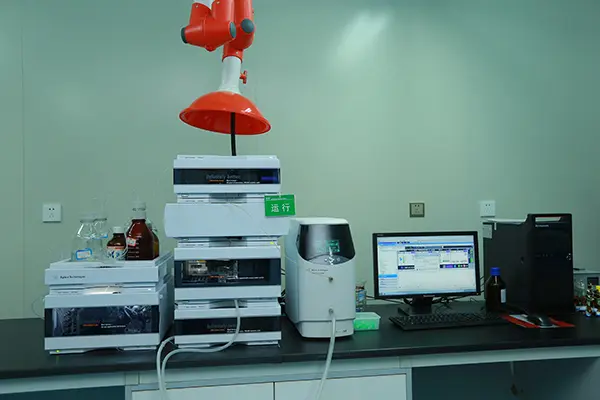
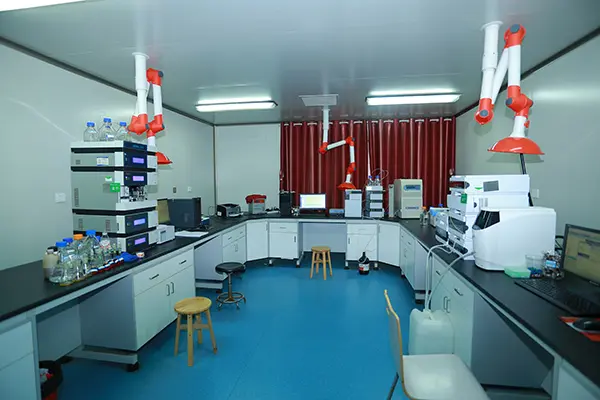
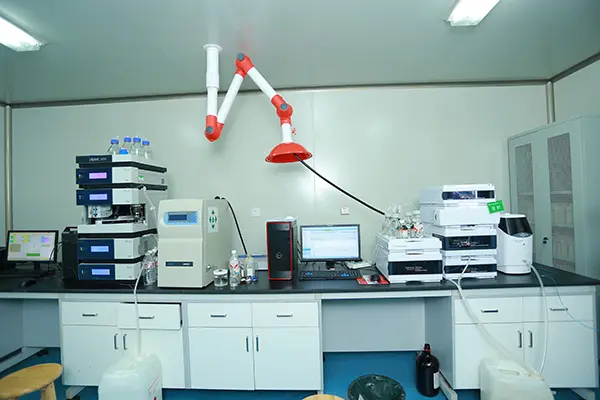
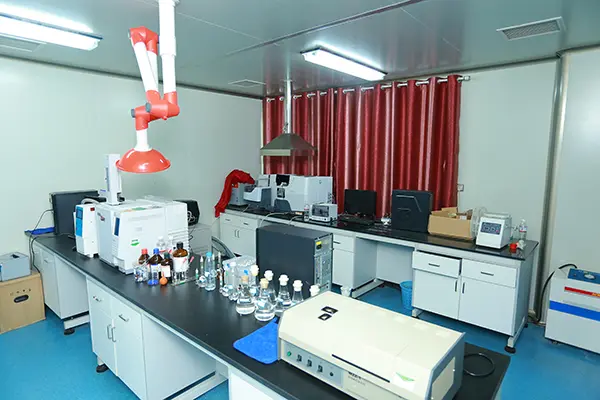
Our central laboratory is accredited by CNAS, running advanced analytical equipment to validate safety, identity, and purity parameters.
United New Life (UniCare) has established a leading and complete quality control system, and strictly controls the high quality of products in accordance with global quality standards. With advanced testing instruments and strict control parameters, we provide every customer with high quality, stable products. Detectable items include signature component detection (HPLC or UV), solvent residues (GC), pesticide residues (organochlorine screening by GC-MS/MS), heavy metals (lead, arsenic, mercury, cadmium, copper by ICP-MS), microscopic identification, moisture, dry weight loss, ash, microbial limits, thin layer chromatography (TLC) identification, bulk density, conductivity, pH value, and sulfur dioxide residue.
| Quality Control Parameter | Analytical Methods & Verification Items |
|---|---|
| Active Ingredient Analysis | Quantitative assay verification, chemical marker identification (HPLC, UHPLC, UV-Vis) |
| Hazardous Substance Analysis | Heavy metals screening, multi-residue pesticide screening, residual solvents clearance |
| Microbiology Assay | Total plate count, Escherichia coli, yeast & mold, and pathogen-specific screening (Salmonella, Staphylococcus aureus) |
| Raw Material Control | Pesticide residue testing, allergen identification, GMO status verification, geographical origin certification |
| Regulatory Compliance | Continuous regulatory tracking across China, EU, US FDA, and other global target markets |
| Stability Testing | Real-time and accelerated stability studies to guarantee active ingredient content throughout shelf life |
| Physical/Chemical Properties | pH value, moisture content, total ash, optical rotation, particle size distribution (PSD), tap/bulk density |
Our central analytical laboratory features modern instrumentation to ensure scientific validation of every lot:
| Instrument Classification | Model & Quantity | Primary Application |
|---|---|---|
| UHPLC (Ultra-High Performance Liquid Chromatography) | Agilent 1290 (×2) | Rapid separation, high-resolution identification of complex phytochemical profiles |
| HPLC (High Performance Liquid Chromatography) | Agilent 1260 (×4) / Shimadzu LC-20AT (×2) / Dionex CU3000 (×2) | Routine quantitative assay verification of active compounds and impurities |
| GC (Gas Chromatography) | Shimadzu GC-2010 (×1) | Quantitative tracking of residual solvents and volatile pesticide residues |
| Atomic Absorption / Spectrophotometry | Shimadzu AA-7000 (×1) | Trace analysis of heavy metals (Pb, Cd, As, Hg) |
| Evaporative Light Scattering Detector (ELSD) | Shimadzu 2000ES (×2) | Analysis of compounds lacking strong chromophores (e.g., lipids, sugars) |
B2B botanical sourcing involves navigating complex regulatory barriers. As a veteran exporter, UniCare provides comprehensive support to satisfy the regulatory standards of the United States FDA, the European Food Safety Authority (EFSA), and regional health authorities. Our documentation suite ensures smooth customs clearance and compliant formulation registration:
To reduce shipping times and minimize the impact of international logistics delays, UniCare operates local distribution hubs and partnerships in key markets. We offer flexible shipping arrangements, including CIF, FOB, and DDP (Delivered Duty Paid), delivering materials directly to your production site with customs clearance fully handled.
Furthermore, we establish dedicated safety stock buffers for long-term contract clients. This strategy shields your production schedule from unexpected shipping bottlenecks or raw material shortages, ensuring your manufacturing line continues to run smoothly.
Addressing critical inquiries from procurement managers, quality assurance specialists, and formulation scientists.
Consolidate your botanical supply chain with our standardized extracts, backed by comprehensive documentation and technical support.