High-purity botanical formulations tailored for functional beverage blending, nutraceutical scaling, and cosmetic integration in Metro Manila, Cebu, and wider ASEAN trade hubs.
The food and beverage processing sector in the Philippines has undergone a profound shift toward natural, clean-label raw materials. Due to the tropical climate and high consumer preference for fruit-flavored formulations—particularly within the ready-to-drink (RTD) tea, confectionery, and functional dairy sectors—the demand for stable fruit ingredients has surged. While fresh litchi (Litchi chinensis) is highly seasonal and notoriously difficult to preserve due to rapid post-harvest enzymatic browning and pericarp degradation, advanced industrial Litchi Powder has emerged as the definitive technical solution.
Unlike raw fruit purée, which demands expensive cold-chain logistics across the Philippine archipelago (from Luzon to Mindanao), dehydrated Litchi Powder retains complete nutritional integrity, volatile flavor compounds, and natural organic acids without requiring refrigeration. Industrial-grade fruit powder serves as the cornerstone for high-capacity manufacturers in Manila, Cebu, and Davao, providing a shelf-stable alternative that ensures consistent product color, solubility, and sensory characteristics throughout long supply chains.
Standard fruit concentrates suffer from moisture-induced microbial contamination and high transport weight. Spray-dried Litchi Powder uses advanced matrix encapsulation (typically with high-molecular-weight maltodextrin or gum arabic carriers) to protect the delicate polyphenolic compounds and vitamin C from oxidation, providing a shelf-life of up to 24 months in standard tropical warehouse conditions (up to 30°C and 80% relative humidity).
Sourcing high-quality raw materials requires a delicate balance of chemical consistency and logistical resilience. For food ingredients and nutritional supplement brands operating in the Philippines, working directly with a China-based, advanced technological exporter like UniCare provides unparalleled supply chain security. By leveraging direct sea freight channels between major Chinese chemical hubs and ports such as Manila (North/South Harbors), Batangas, and Cebu, procurement teams can reduce lead times to under 10 days.
Furthermore, our manufacturing plants comply with strict regulatory frameworks, resolving the common import friction associated with phytosanitary clearances, FDA registrations, and Halal certifications required by the Department of Agriculture (DA) and the Department of Health (DOH) in the Philippines.
UniCare is a professional supplier of natural active ingredients. Our products are widely used in various fields such as dietary supplement, food, cosmetics and pharmaceuticals. We focus on product development and quality stability, and insist on growing together with our customers around the world.
UniCare has deep cooperation with several excellent Chinese manufacturers who have complete quality management system certifications, including but not limited to GMP, EUGMP, CEP, ISO9001, ISO22000, and HACCP. Each factory has independent testing capabilities and is equipped with advanced and efficient testing equipment to ensure the high quality and long-term stability of each batch of products.



Unlocking therapeutic biomolecules and organic compounds through sustainable, state-of-the-art agricultural partnerships and extraction sciences.

Systematically upgrading isolation technologies, solvent systems, and clean-label drying methodologies to match modern global regulatory requirements.

Implementing Industry 4.0 automation, smart sensors, and advanced analytical chromatography to assure absolute batch-to-batch conformity.

Fostering an equitable working ecosystem that empowers scientific researchers and invests in long-term farming community development.
Phytochemical isolates designed to support systemic health applications, certified for immediate blending under GMP requirements.
For decades, the global extraction market faced wild variance in active ingredient percentages, heavy metal contaminations, and microbiological spikes. Under the Factory 4.0 blueprint, UniCare and its partners have transformed traditional botanical extraction into a digitally managed, closed-loop industrial process.
Utilizing smart, automated control systems across six massive extraction lines, our process minimizes human contact, eliminating secondary contamination risks. Automated temperature controls ensure that heat-sensitive fruit enzymes and polyphenols are not degraded during concentration. Real-time sensor arrays track parameters like moisture level, drying speed, and particle size distribution.
This level of control is highly beneficial for Philippine food processing plants that require uniform powder fluidity to prevent clogging in high-speed pouch-filling machinery. By optimizing production cycles and yield efficiency, we significantly lower unit manufacturing costs—savings that are passed directly to our commercial partners in Manila, Quezon City, and Cebu.
Our automated monitoring system integrates SCADA and PLC control networks. From raw material intake, washing, extraction stages (utilizing dynamic countercurrent extraction tanks), membrane filtration, down to spray-drying parameters (inlet/outlet air temperatures regulated within ±0.5°C), every process variable is logged for full batch traceability.
1. Ready-To-Drink (RTD) and Boba Tea Powders: The Philippines represents one of the largest markets for milk tea and fruit-infused teas in Southeast Asia. Litchi powder provides instant dispersion and a clean flavor profile, blending seamlessly with black and green tea powders without leaving chalky residues.
2. Confectionery and Baked Goods: Locally manufactured hard candies, fruit jellies, and bakery fillings leverage Litchi powder for its heat stability. Dehydrated litchi powder retains its natural acidity and sweet notes even when exposed to high-heat pasteurization or baking conditions.
3. Nutraceuticals & Beauty Supplements: Litchi contains high levels of oligonol and polyphenolic compounds. The local beauty and wellness market in the Philippines has adopted litchi extract powder as a star ingredient in collagen drinks, skin-brightening capsules, and anti-aging formulations.
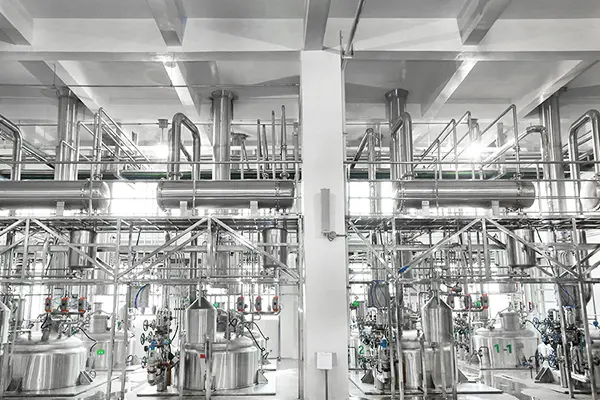
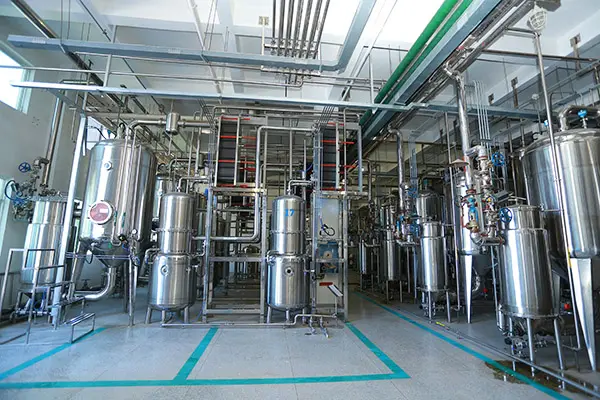
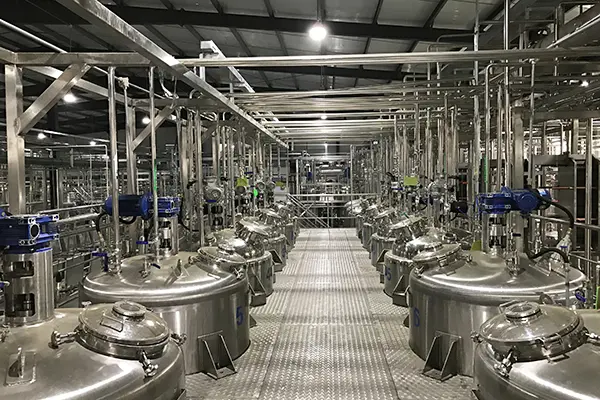
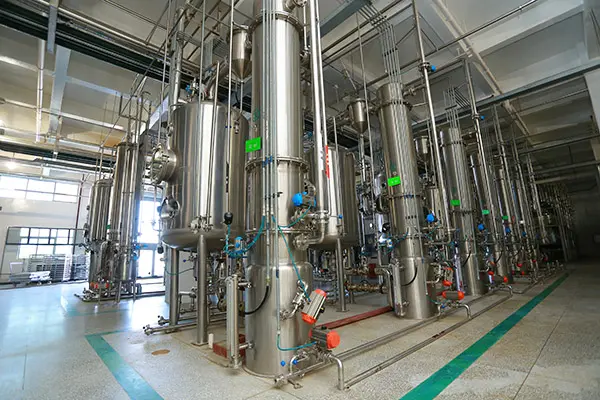
Our facility hosts the largest and most advanced extraction infrastructure in China, fully integrated under intelligent automated supervision.

UniCare attaches great importance to the hardware conditions of production equipment and has the largest and most advanced extraction factory in China. The entire production line in UniCare is controlled by a modern, intelligent, automatic control system.
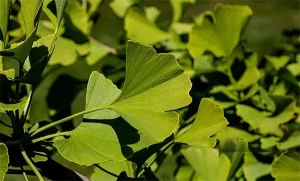
Until now, UniCare has built up two GMP workshops, containing six multi-functional extraction lines, among which there is the only production line for Ginkgo Biloba Extract of acetone process in the whole China. Here are several other production lines including fermentation production lines and Chinese medicine pieces. A total of 30,000 tons of various Chinese medicine plant raw materials can be processed each year.

Fully certified manufacturing facilities meeting clean room class standards.

Recognized by European Directorate for Ginkgo Biloba acetone processes.

Process parameter logging minimizes batch deviations automatically.

Equipped with the most sophisticated concentration & drying lines in Asia.

Massive raw material handling capacities secure stable wholesale supply.

Includes 3 dynamic countercurrent systems (10 & 15 tons capacity).
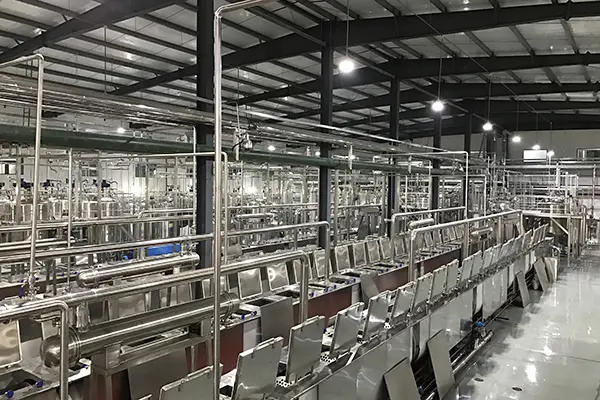
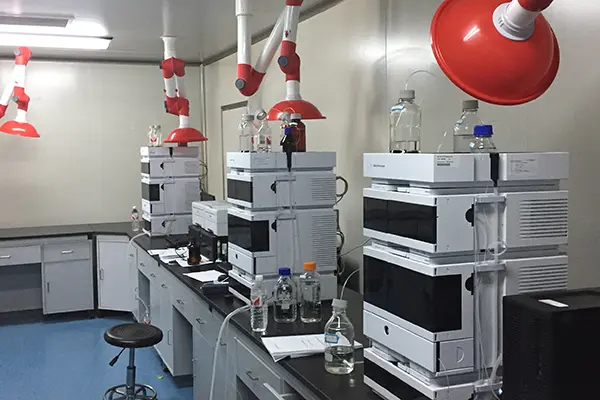
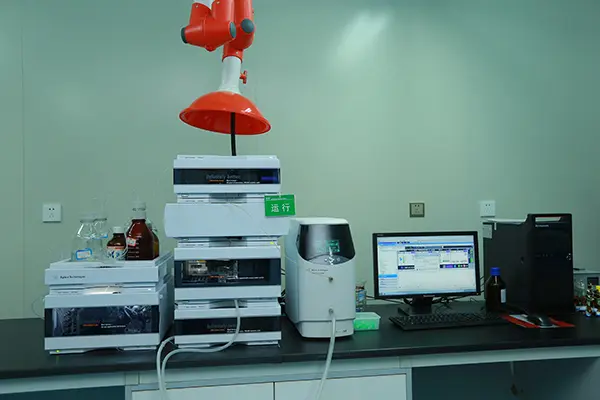
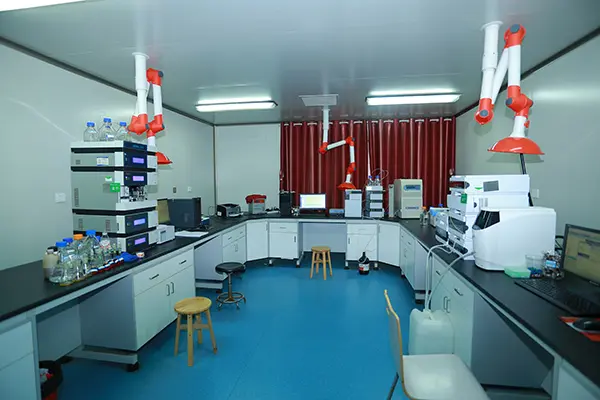
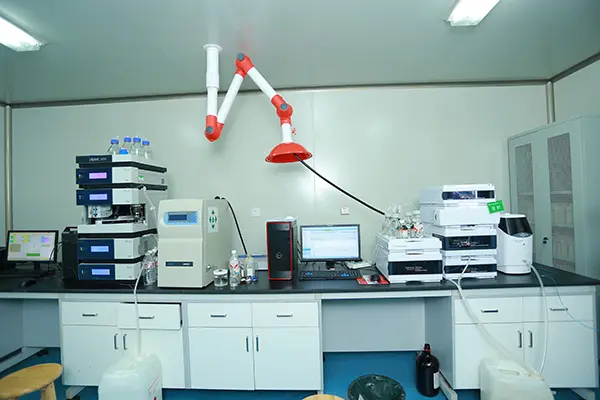
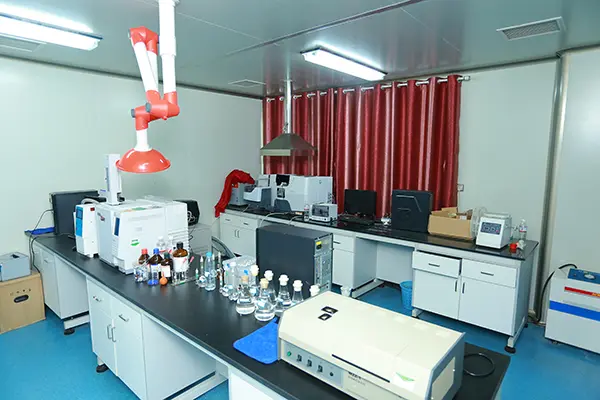
Our analytical labs utilize industry-leading instrumentation to guarantee trace component verification and absolute food safety profiles.
United New Life has established a leading and complete quality control system, and strictly controls the high quality of products in accordance with the quality system. With advanced testing instruments, strict control of product quality, to provide every customer with high quality products.
Detectable items include: Signature component detection (HPLC or UV), solvent residues GC, pesticide residues (organochlorine detection) GC-MS-MS, heavy metals (lead, arsenic, mercury, cadmium, copper) ICP-MS microscopic identification, moisture, dry weight loss, ash, microbial limits, thin layer identification, weighing, conductivity, PH, sulfur dioxide residue, routine detection, etc.
Important testing instruments: Two UHPLC Agilent 1290 ultra-high performance liquid chromatographs, four HPLC Agilent 1260 high performance liquid chromatography sets, two HPLC Shimadzu LC-20AT high performance liquid chromatograph, two HPLC Diane CU3000, two Shimadzu evaporative light scattering detector 2000ES, one Shimadzu GC2010 gas chromatograph, and one Shimadzu AA-7000 atomic absorption system.
| Quality Control Item | Analytical Parameters & Scope |
|---|---|
| Active Ingredient Analysis | Assay, identification, marker quantification |
| Hazardous Substance Analysis | Heavy metals (ICP-MS), pesticide residue (GC-MS-MS), residual solvents (GC-Headspace) |
| Microbe Analysis | Total plate count, yeast & mold, Salmonella, E. coli, Pseudomonas aeruginosa |
| Raw Material Control | Geographical origin verification, GMO testing, allergen profiling, identity verification |
| Stability Studies | Accelerated and long-term climate chamber aging tests (USP/ICH guidelines) |
| Physical Testing | pH value, bulk/tapped density, moisture (Karl Fischer), ash, optical rotation, particle size distribution |
| Instrument Model | Configuration Count | Primary Analytical Purpose |
|---|---|---|
| UHPLC Agilent 1290 | 2 Units | Ultra-high-pressure chromatograms for fast molecular isolation |
| HPLC Agilent 1260 | 4 Units | Standard phytochemical marker assays and purity verification |
| HPLC Shimadzu LC-20AT | 2 Units | Routine raw material assay verification |
| Shimadzu GC-2010 | 1 Unit | Volatile organic compound (VOC) and extraction solvent analysis |
| Shimadzu AA-7000 | 1 Unit | Flame and furnace atomic absorption for trace metal determination |
Our scientific investments extend from genetic seedling optimizations to direct co-development projects with prestigious academic institutions.

UniCare invests 10% of our annual net profit in research and development. In addition to optimizing and developing the existing natural plant extraction process, we have also established a professional R&D department for natural fermentation products. By increasing investment in natural fermentation products, we try to break through the traditional processes and disrupt industry development.
UniCare has deep cooperation with Beijing University of Chemical Technology in the field of fermentation, jointly developing and transforming new raw materials of pharmaceutical, cosmetic, and natural health products into mass-produced products.
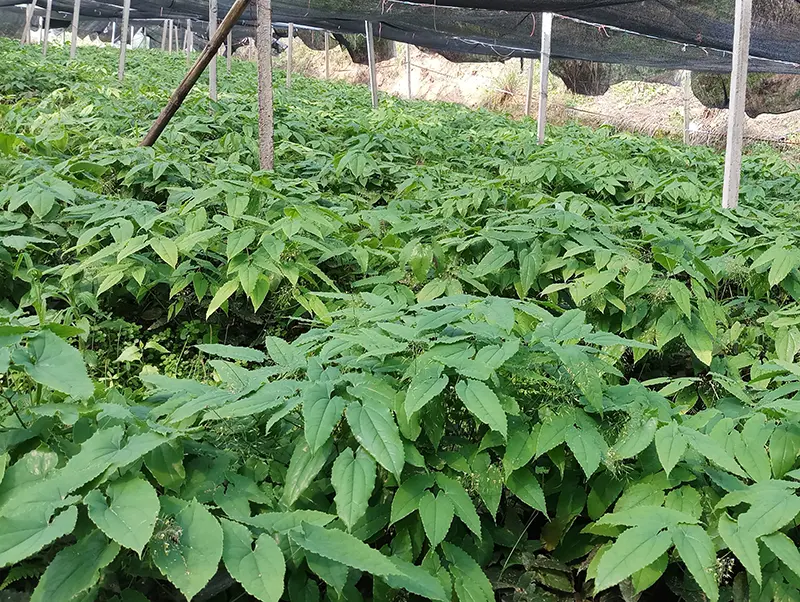
In order to control raw materials more efficiently and with higher quality, a raw material procurement system has been established, which extends procurement to every piece of planting land and can trace the raw materials of each batch of products. The storage of raw materials is operated according to the advanced quality management system process, and the content of active ingredients, moisture, ash, heavy metals, pesticide residues and other items of raw materials are strictly controlled.
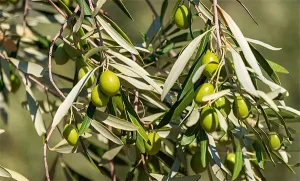
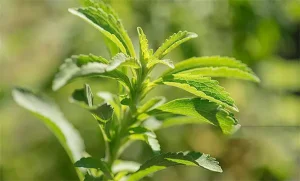
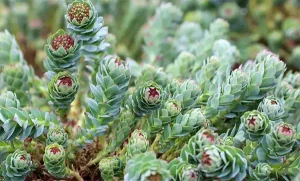
At the same time, in order to further ensure the high quality of important products, UniCare cooperated with planting farmers to establish ginkgo leaf planting bases, epimedium planting bases, phellodendron planting bases, olive leaf planting bases, etc. Some of these bases are planted strictly in accordance with the GACP management model. In addition, we cooperate with seedling research and development companies to develop high-content seedling cultivation.
For industrial procurement departments operating in the Philippines, verifying physical-chemical properties is key to avoiding production delays. Spray-dried powders must meet rigorous standards for bulk density, particle size, and moisture content to perform optimally in automated packaging systems. Below are the standard export specifications maintained by UniCare for its high-grade botanical and fruit powder series:
| Physical/Chemical Metric | Export Specification Limit | Testing Methodology Reference |
|---|---|---|
| Loss on Drying (Moisture) | ≤ 5.0% w/w | USP <731> (Gravimetric oven drying) |
| Particle Size Distribution | 98% passing through 80 Mesh | Analytical Sieve Shaking (USP <786>) |
| Heavy Metals (Pb, As, Cd, Hg) | Lead ≤ 1.0 ppm, Arsenic ≤ 0.5 ppm | ICP-MS (USP <233>) |
| Aflatoxins (B1, B2, G1, G2) | ≤ 5 ppb | HPLC-FLD Method |
| Pesticide Residue | Non-detectable / EC Regulation standards | GC-MS-MS / LC-MS-MS screening |
Essential technical and logistical answers for procurement managers, food scientists, and regulatory officers in the Philippines.
Our complete line of certified active ingredients designed for functional foods, beverages, and cosmetic compounding.