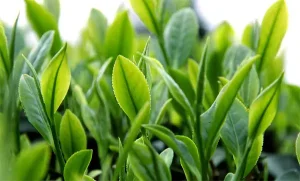
Green tea extract (derived from *Camellia sinensis*) is a cornerstone of the modern functional food, dietary supplement, and pharmaceutical manufacturing sectors. Rich in biologically active polyphenols, specifically catechins such as Epigallocatechin Gallate (EGCG), the compound holds global clinical significance for metabolic support, cognitive health, anti-oxidation, and skin rejuvenation.
For global procurement managers, identifying the correct factory partner is not merely a matter of unit price; it requires rigorous scrutiny of industrial manufacturing practices, botanical sourcing traceability, analytical validation, and regulatory compliance. This B2B guide provides the foundational intelligence required to benchmark and select high-performing extraction facilities and exporters capable of servicing strict global regulatory frameworks.

Translating Botanical Potential Into Validated, Scalable Industrial Solutions.

UniCare is an established, professional supplier of high-purity natural active ingredients. Catering to global enterprises in the pharmaceutical, nutraceutical, cosmetics, and functional food sectors, our structural framework is built on absolute chemical quality stability, trace biological verification, and collaborative R&D.
To ensure complete quality governance, UniCare maintains deep structural integrations with select top-tier Chinese extraction facilities. Our manufacturing partners are accredited across global quality management standards, including:
Every batch originates from certified regions, featuring comprehensive tracking details from agricultural origin through molecular separation in the central lab.
Why China Represents the Premier Global Hub for Green Tea Extract Production and Exportation.
China is home to the largest geographical tea plantations globally. Cultivated areas across provinces like Zhejiang, Anhui, Sichuan, and Hunan offer localized access to raw *Camellia sinensis* crops. This proximity minimizes raw botanical degradation during transport, locking in natural catechin integrity before processing starts.
Our facilities support massive high-capacity processing operations. Annular dynamic countercurrent extraction lines and multi-stage crystallization systems ensure continuous production with minimum solvent ratios. China's industrial infrastructure allows for a high volume of output without sacrificing batch uniformity.
For Western functional markets, reducing caffeine below 0.5% (or 0.1% for specific pediatric or sensitive formulations) is critical. Chinese extraction plants employ advanced resin adsorption chromatography and supercritical fluid extraction (SFE) to isolate catechins while cleanly parting caffeine from the extract matrices.
UniCare places great importance on the physical and hardware specifications of extraction lines. Our partnering production structures are governed by intelligent, modern automated control networks that maintain strict parameters (temperature, pressure, elution speed, flow rates) to prevent thermodegradation of fragile catechins.
Our operational infrastructure includes:



Ensuring Identity, Purity, Potency, and Clean-Label Safety in Every Shipping Container.
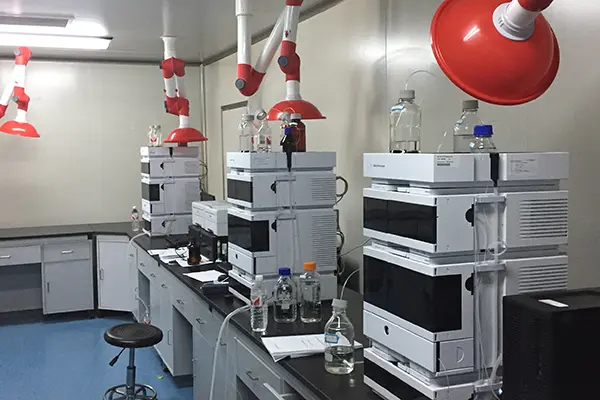
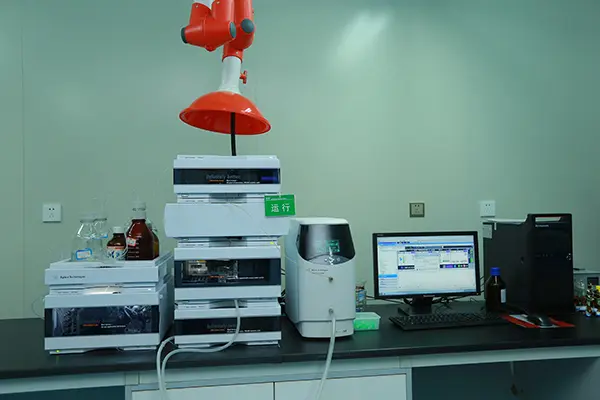
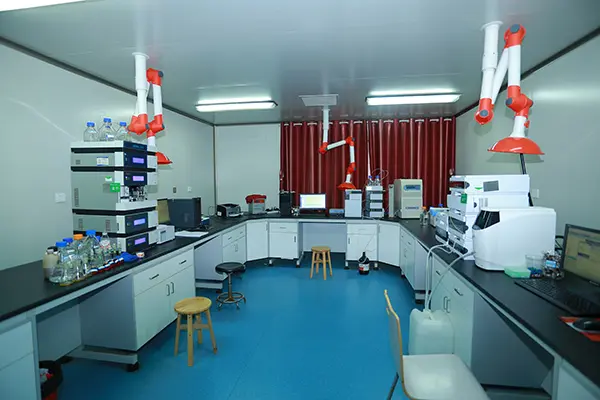
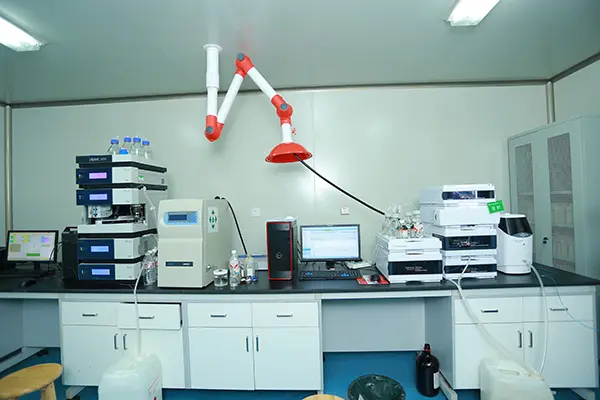
In the phytopharmacological marketplace, high-purity claims require verifiable, empirical data. UniCare has structured an exhaustive quality control regime. Our analytical laboratory, qualified in accordance with CNAS requirements, operates modern diagnostic equipment to guarantee chemical properties and identify potential trace contaminations.
| Quality Analysis Category | Specific Testing Scope & Parameters | Analytical Equipment Implemented |
|---|---|---|
| Signature Component Assay | Verification of target active content (EGCG, Polyphenols, Catechins, Caffeine) | UHPLC Agilent 1290, HPLC Agilent 1260, HPLC Shimadzu LC-20AT |
| Pesticide Residues | Screening of organochlorine and organophosphorus compounds (EC 396/2005) | GC-MS-MS (Gas Chromatography tandem Mass Spectrometry) |
| Heavy Metal Limits | Quantification of Lead (Pb), Arsenic (As), Mercury (Hg), Cadmium (Cd), Copper (Cu) | ICP-MS (Inductively Coupled Plasma Mass Spectrometry) / Shimadzu AA-7000 |
| Organic Solvent Residues | Tracing residual ethanol, acetone, or hexane levels within regulatory parts-per-million (ppm) | Shimadzu GC-2010 Gas Chromatograph with Headspace Sampler |
| Microbiological Limits | Aerobic plate counts, Yeast & Mold, E.coli, Salmonella, Staphylococcus aureus | Biological Incubators & PCR Identification System |
| Physical Identification | Particle size distribution, bulk density, tap density, moisture, total ash, and solubility | Tapped Density Testers, Laser Particle Analyzers, Moisture Balances |
Our analytical floor is populated by advanced hardware configurations: two UHPLC Agilent 1290 ultra-high performance liquid chromatographs; four HPLC Agilent 1260 high-performance liquid chromatography sets; two HPLC Shimadzu LC-20AT sets; two HPLC Dionex (Diane) CU3000 systems; two Shimadzu evaporative light scattering detectors (ELSD 2000ES); one Shimadzu GC-2010 gas chromatograph; and one Shimadzu AA-700 atomic absorption system.
Ensuring Innovation in Bio-Availability and Agricultural Traceability
UniCare dedicates 10% of our annual net profit to research and development. Beyond standard solvent optimization, our efforts target clean enzymatic modifications and bio-conversions.
We work in partnership with the Beijing University of Chemical Technology on fermentation technologies to transform traditional botanical molecules into bio-available compounds, creating scalable, high-yield solutions for various industries.
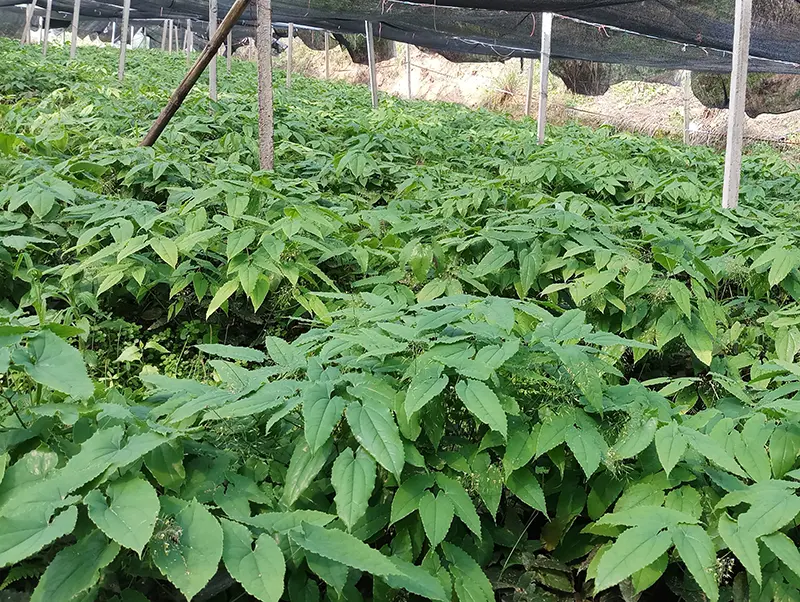
Consistent quality in active compounds begins with soil and seed. In cooperation with agricultural partners, UniCare operates specialized planting zones (such as ginkgo, epimedium, phellodendron, and olive leaf fields). Many of these zones strictly follow GACP (Good Agricultural and Collection Practice) guidelines. Our breeding research leverages natural hybridization and selection to yield robust parent strains with higher concentrations of active ingredients, helping to control production costs.

Aligning Advanced Tech with Social Responsibility and Botanical Science.

Unlocking the molecular values hidden within herbal matrices to create active, clinically relevant molecules.

Constant mechanical refinement of extraction efficiency, purity levels, and environmental processing footprints.

Deploying analytical instrumentation to verify safety, stability, and composition across all product lines.

Supporting our workforce and giving back to regional agricultural communities via sustainable farming agreements.
Customized Molecular Grades Targeted for Diverse Industry Verticals.
High-purity EGCG (94%-98%) serves as a metabolic catalyst in weight management, metabolic support, and cardiovascular health formulations. We guarantee low heavy metal profile counts, conforming with global consumer safety guidelines.
For RTD (Ready-To-Drink) teas, wellness beverages, and energy bars, we supply highly water-soluble, organoleptically optimized green tea extracts. Decaffeinated forms ensure wellness products deliver potent tea polyphenols without the nervous-system stimulation of caffeine.
Polyphenols act as natural topical antioxidants. Our cosmetic-grade green tea extracts, standardized to EGCG, offer excellent light-stable characteristics. They are regularly integrated into anti-aging, photoprotective, and acne control skincare formulations.
A Decision-Making Reference for Strategic Sourcing Officers & QA Directors.
When auditing potential Green Tea Extract manufacturers or exporters, quality assurance teams should benchmark candidates against the following standard operational checklist:
14 - 21 Days (FOB Port)
25 kg (Industrial Drum)
COA, MSDS, Phytosanitary, Halal, Kosher
Addressing Regulatory, Technical, and Logistical Questions for Professional Buyers.