Providing scientifically standardized compounds with certified quality verification parameters.
An analytical breakdown of consumer dynamics, metabolic health trends, and regulatory guidelines driving demands in Tokyo's metropolitan market.
As the largest metropolitan economy in the world, Tokyo has become the epicenter of functional food innovations. With a rapidly aging demographic and an increased focus on metabolic syndrome management, Tokyo-based consumers are actively demanding preventative nutrition. Among the most sought-after natural agents is Mulberry Leaf Powder and its high-potency derivative extracts. The biochemical compound responsible for this surging interest is 1-Deoxynojirimycin (DNJ), a polyhydroxylated alkaloid that functions as a highly competitive inhibitor of α-glucosidase in the human small intestine.
In central business districts like Chiyoda, Minato, and Shinjuku, urban professionals face high-stress, convenience-driven lifestyles. This has propelled the popularity of "Locabo" (low-carbohydrate) foods, functional beverages, and blood-glucose-regulating botanical supplements. Standardized Mulberry Leaf Powder provides a clean-label, plant-based solution for local formulations, finding applications in metabolic wellness formulas, functional confectioneries, and ready-to-drink premium tea packets marketed across Tokyo's major convenience store systems and specialized pharmacies.
1-Deoxynojirimycin (DNJ) structurally mimics glucose molecules, allowing it to transiently bind to α-glucosidase enzymes. This halts the enzymatic hydrolysis of complex carbohydrates into monosaccharides, thereby reducing postprandial glucose surges. For Japanese functional foods regulated under the "Foods with Function Claims" (FFC) framework, clinical standardization of DNJ is vital. Tokyo food technologists demand stable, highly soluble, and low-astringency raw materials that seamlessly integrate into existing production lines without altering sensory or organoleptic profiles.
UniCare is a highly specialized, professional supplier of premium natural active ingredients. Our botanical extracts and customized formulation powders are widely utilized globally in dietary supplements, functional foods, clean-label cosmetics, and high-standard pharmaceuticals. We focus continuously on targeted product development and long-term quality stability, partnering with global functional brands to supply high-efficacy ingredients that satisfy international standards.
UniCare maintains deep, strategic cooperation with several outstanding Chinese manufacturing facilities. These factories hold complete, audited quality management system certifications, including but not limited to GMP, EU-GMP, CEP, ISO9001, ISO22000, and HACCP. Each partner facility possesses robust, independent testing capabilities and is fully equipped with highly advanced, efficient analytical instruments to ensure the absolute quality compliance and long-term batch stability of every product shipped.


Merging traditional herbal wisdom with state-of-the-art bioprocess engineering to deliver clean health alternatives.

Unlocking the complex biochemical pathways of traditional herbs to reveal novel molecular values.

Constantly optimizing extraction efficiency and purification levels to meet modern clean-label demands.

Utilizing automated physical extraction machinery to guarantee unparalleled purity and process safety.

Cultivating a dedicated, passionate workforce and donating back to ecological cultivation communities.
Understanding supply mechanics, extraction technologies, and distribution channels for commercial applications.
The global market for Mulberry Leaf Powder is witnessing a structural transformation. Traditionally used in sericulture and local herbal preparations, *Morus alba* has gained global scientific recognition as a potent metabolic stabilizer. The global supply chain relies heavily on highly efficient agricultural zones in China, where specialized high-content mulberry cultivars are grown. Advanced extraction facilities process leaves into standardized active powder formats that comply with strict global safety indices (residual solvents, heavy metals, pesticide limits).
In Tokyo, the import of botanical ingredients is governed by the Ministry of Health, Labour and Welfare (MHLW) under the Food Sanitation Act. Japanese procurement directors mandate that plant extracts must pass rigorous inspections at quarantine stations before customs clearance. This regulatory landscape requires suppliers to provide thorough documentation, including pesticide residue profiles (specifically targeting organophosphorus and organochlorine compounds), GMO-free statements, and heavy metal testing via Inductively Coupled Plasma Mass Spectrometry (ICP-MS).
UniCare's close alignment with specialized testing organizations like CNAS ensures that our shipments comply with Japan's Positive List System for Agricultural Chemicals, eliminating entry barriers for import operations at Tokyo Port.
From historical confectionery districts to advanced functional beverage manufacturers in Kanto.
Traditional confectionery shops (Wagashi) in historic Tokyo neighborhoods such as Asakusa and Nihonbashi are incorporating ultra-fine Mulberry Leaf Powder into dango, mochi, and manju formulations. By providing a natural green pigment and healthy bio-active properties, manufacturers can offer low-glycemic confectioneries catering to health-conscious consumers.
Standardized Mulberry Leaf Extract (containing 1% or 2% DNJ) is compressed into tablets or encapsulated in Tokyo nutraceutical laboratories. Sold across pharmacies in Ginza and Shibuya, these supplements are positioned as pre-meal sugar-blockers targeting individuals seeking weight management solutions.
Beverage research labs in Tokyo are developing cold-brew wellness teas that substitute or complement traditional matcha with mulberry leaf powder. Because it is naturally caffeine-free and contains GABA and flavonoids, it appeals to a broad demographic seeking afternoon relaxation without sleep disruption.
How our extraction processes maintain active compound profiles while ensuring organoleptic stability.
A primary challenge in extracting high-quality active components from mulberry leaves is preserving the delicate structure of polyhydroxylated alkaloids (DNJ) under elevated thermal conditions. UniCare's manufacturing partners leverage advanced low-temperature extraction technology combined with vacuum concentration to maximize active compound yields.
The processing starts with fresh, hand-picked *Morus alba* leaves harvested during their peak phytochemical phase. Water extraction is carried out at low pressures, followed by a multi-stage membrane filtration to isolate the target fraction. Chromatographic separation techniques are employed for higher concentration grades (such as 5% or 10% DNJ), yielding a clean, water-soluble powder. Finally, spray drying with modified carrier structures ensures optimal particle size distribution and fast dissolution rates, which are key for automated mixing lines in functional food production.
| Specification Parameter | Standard Powder Format | High-Potency Extract (Standardized) | Analytical Verification Method |
|---|---|---|---|
| Active DNJ Content | ≥ 0.1% to 0.5% | 1.0% to 10.0% (Customizable) | HPLC-ELSD / HPLC-MS |
| Appearance & Color | Light green to olive-green powder | Fine yellowish-brown powder | Visual & Colorimetry |
| Solubility Profile | Dispersible in water (Suspension) | Fully soluble in water (Clear solution) | Gravimetric Solubility |
| Heavy Metals (Pb, As, Cd) | ≤ 10.0 ppm (Total) | ≤ 5.0 ppm (Total) | ICP-MS (MHLW Compliance) |
| Pesticide Residue | Negative / Below detection limit | Negative / Below detection limit | GC-MS-MS (Positive List System) |
UniCare places paramount importance on the technological and hardware conditions of our production infrastructure. We operate in alignment with the largest and most advanced extraction factory networks in China. The entire production sequence across our facilities is strictly monitored and operated by modern, intelligent, and automatic digital control systems.
Currently, our partners have constructed two GMP-compliant workshops containing six multi-functional extraction lines. This includes the only specialized production line for Ginkgo Biloba Extract using the high-standard acetone process in China. Additionally, we run specialized fermentation lines and processing units for Chinese herbal ingredients. A total volume of 30,000 tons of botanical plant raw materials can be processed annually.
 China GMP Certified Factory: Production operates under strict safety and batch traceability guidelines.
 EU-GMP & CEP Certification: High-standard Ginkgo Biloba Extract process validated by European regulatory bodies.
 Intelligent Automation: Every extraction loop is controlled by PLC systems to eliminate human process errors.
 Advanced Equipment: Multi-functional extraction tanks and state-of-the-art isolation columns.
A look inside our CNAS-qualified laboratory infrastructure and analytical instrumentation.
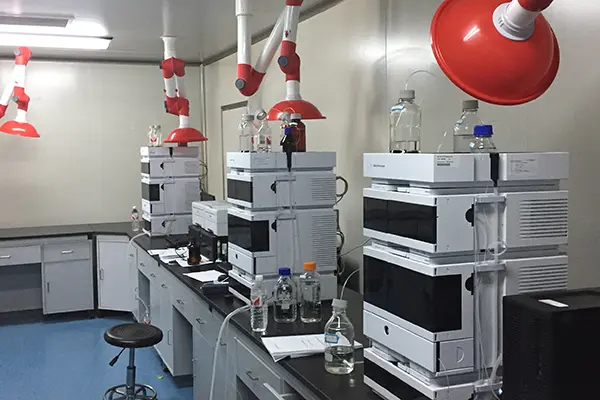
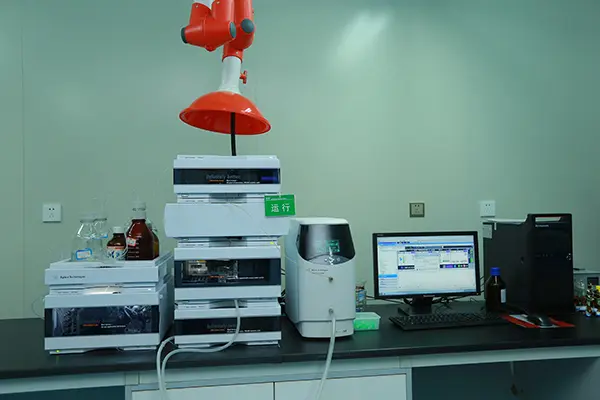
UniCare and our manufacturing partners have established a leading, comprehensive quality control system, strictly verifying product purity in accordance with global quality guidelines. Equipped with advanced analytical instrumentation, our quality assurance staff monitors raw materials, mid-process intermediates, and finished powders. Our analytical matrix covers:
| Analytical Equipment Model | Quantity Available | Primary Testing Operation |
|---|---|---|
| UHPLC Agilent 1290 (Ultra-High Performance Liquid Chromatography) | 2 Units | Fast and precise determination of active compound profiles (DNJ, Flavonoids) |
| HPLC Agilent 1260 (High-Performance Liquid Chromatography) | 4 Units | Routine purity assay and raw material active ingredient profiling |
| HPLC Shimadzu LC-20AT | 2 Units | Parallel analysis of signature components and purification validation |
| HPLC Dionex UltiMate 3000 | 2 Units | Chromatographic isolation testing and trace compound validation |
| Shimadzu GC-2010 (Gas Chromatography) | 1 Unit | Organic residual solvents detection (Ethanol, Methanol, Acetone) |
| Shimadzu AA-7000 (Atomic Absorption Spectrophotometer) | 1 Unit | Heavy metal testing matching global pharmacopoeia requirements |
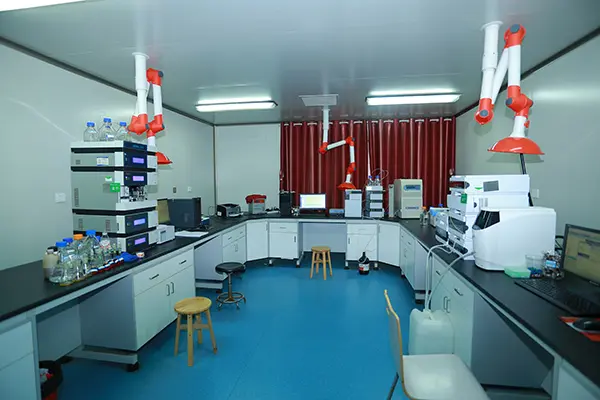
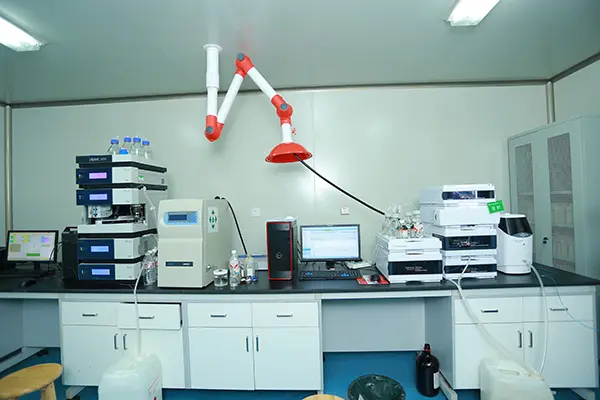

UniCare reinvests 10% of our annual net profit back into research and development. In addition to optimizing traditional plant extraction methodologies, we operate a dedicated R&D division focused on natural fermentation products. Our goal is to leverage advanced biological fermentation pathways to surpass conventional processing constraints.
We maintain an active, deep cooperation program with the Beijing University of Chemical Technology in the field of industrial fermentation. This partnership accelerates the translation of lab-scale innovations in cosmetics, pharmaceuticals, and dietary supplements into volume-stable, mass-produced botanical ingredients.
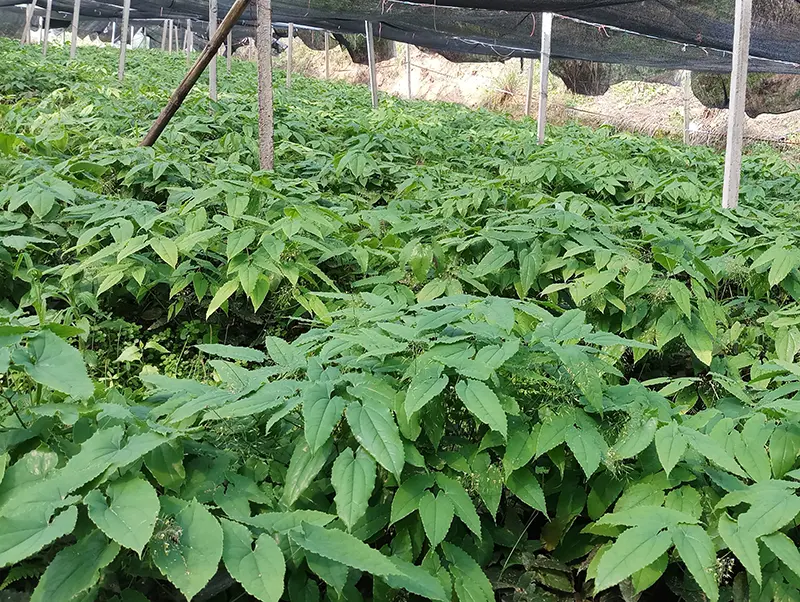
To control raw material quality from the soil up, we have established a strict procurement system that traces raw ingredients to specific cultivation parcels. The storage of botanicals is managed via strict quality workflows, assessing moisture levels, active component values, heavy metals, and pesticide metrics before processing.
To ensure supply stability for our core lines, UniCare works directly with local growers to manage dedicated cultivation bases for Ginkgo Leaf, Epimedium, Phellodendron, and Olive Leaf. Select farms are managed in strict adherence to the GACP (Good Agricultural and Collection Practice) model. We also partner with agricultural research institutes to develop high-content cultivars, continuously improving raw crop quality to lower costs for our global customers.
Ensuring consistent inventory availability, low freight times, and seamless regulatory clearance.
For procurement officers in Tokyo, supply chain interruptions present a significant risk. The geopolitical proximity of Chinese cultivation zones and extraction sites to Japan provides a distinct logistics advantage. Ocean freight shipping from Shanghai or Ningbo ports to the Port of Tokyo typically takes only 3 to 5 days. Compared to raw materials sourced from Europe or South America, which can require up to 45 days in transit, our logistics pipeline allows Tokyo brands to maintain lean safety stocks and optimize working capital.
Furthermore, UniCare manages bulk ingredient safety buffers, allowing us to respond quickly to sudden demand spikes in the Japanese market. We provide comprehensive documentation support—including certificates of origin, allergen statements, BSE/TSE-free declarations, and irradiation-free statements—facilitating quick customs clearances at Japanese entry ports.
Answering common questions regarding compliance, shipping, and formulation customization.
Yes. Every batch of our Mulberry Leaf Powder is tested via gas chromatography-mass spectrometry (GC-MS-MS) to confirm that pesticide residues are either absent or well below the maximum residue limits (MRLs) established under Japan’s Positive List System. We provide comprehensive pesticide test reports with every shipment.
We supply standard raw Mulberry Leaf Powder containing natural DNJ levels (approx. 0.1% to 0.5%), as well as concentrated, standardized extracts containing 1.0%, 2.0%, and up to 10.0% DNJ by HPLC. Custom concentrations can also be manufactured to meet your formulation specifications.
Japan’s Food Sanitation Act enforces strict limits on heavy metals in food ingredients. We test all batches using Inductively Coupled Plasma Mass Spectrometry (ICP-MS). Our typical limits for lead are less than 1.0 ppm, arsenic less than 1.0 ppm, and cadmium less than 0.1 ppm, which easily satisfy Japanese import standards.
Our standard MOQ for commercial orders is 25 kg (packaged in clean, double-lined fiber drums). For stocked standard items, dispatch from our warehouse takes 2 to 5 days, followed by a 3 to 5 day sea voyage to Tokyo Port.
Browse our complete range of certified organic and conventional plant extracts available for Tokyo industries.

Connect with our technical sales engineers to request free samples, custom specifications, or a competitive quotation tailored for the Tokyo market.